Introduction
A distributor in Pune running three warehouses recently discovered a ₹4 lakh discrepancy between physical stock and records — traced back to WhatsApp-approved transfers that never made it into the system. It's not an unusual story. As Indian MSMEs scale, manual stock errors eat into margins, order volumes outpace tracking capacity, and GST e-invoicing compliance (mandatory above ₹5 crore turnover) adds another layer of operational weight — one that covers a significant share of India's 6.3 crore+ MSME base.
The result: warehouse operations that worked at smaller scale are breaking down at growth stage. Spreadsheets, WhatsApp approvals, and disconnected tools create blind spots that cost money.
Warehouse Management Software (WMS) addresses exactly this problem — replacing manual chaos with real-time stock visibility, automated workflows, and accurate order control. This guide covers the best WMS systems for Indian businesses in 2026, the key criteria to compare them on, and a practical demo guide covering exactly what to ask vendors before shortlisting.
Key Takeaways
- WMS automates core warehouse operations: inventory tracking, picking, packing, and dispatch
- Key benefits for Indian businesses include real-time stock visibility, GST compliance readiness, and reduced fulfillment errors
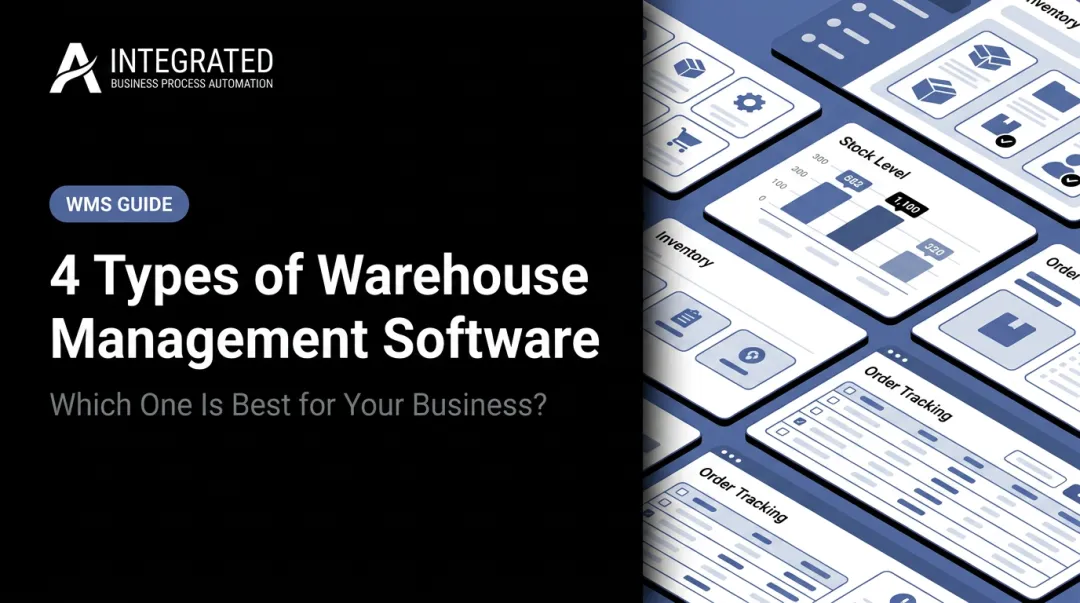
- The three main types are standalone/on-premise, cloud-based SaaS, and ERP-integrated WMS
- Shortlist systems based on scalability, integration depth, ease of use, and India-specific compliance features
- Always request a scripted live demo built around your actual workflows, not a generic product walkthrough
What Is Warehouse Management Software and Why It Matters in 2026
Defining WMS
A WMS is software that manages and controls daily warehouse operations — from the moment goods arrive at a facility to the moment they ship out. That includes inbound receiving, putaway, real-time inventory tracking across locations, order picking, packing, and dispatch.
Modern WMS platforms replace the manual, error-prone processes that remain common in growing Indian businesses:
- Inbound receiving and putaway — logging goods received against purchase orders, assigning storage locations
- Real-time inventory visibility — knowing exactly what stock is where, across single or multiple warehouses
- Order picking optimization — batch, zone, or wave picking to reduce floor travel time
- Shipping and dispatch integration — linking fulfillment to courier partners and generating compliant documentation
- Reporting and analytics — dashboards tracking KPIs like inventory accuracy, fulfillment rates, and pick accuracy
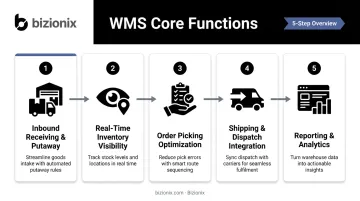
Without these functions automated, growing businesses face stockouts, duplicate orders, mismatched invoices, and GST and e-way bill compliance gaps.
The Market Context
India's WMS market is expanding at a pace that reflects how urgently businesses are moving away from manual operations. Two independent projections illustrate the scale:
| Source | 2025 Market Size | Projected Size | CAGR |
|---|---|---|---|
| IMARC Group | USD 212.4 million | USD 1,694.7 million (2034) | 25.18% |
| Grand View Research | USD 174.6 million | USD 1,093.3 million (2033) | 26.3% |
At 25–26% annual growth, the vendor landscape is maturing quickly — meaning more options, but also higher stakes in choosing a system that fits your operations today and scales with you over the next three to five years.
The systems reviewed below were assessed specifically against Indian business requirements: GST compliance, multi-warehouse support, and integration with domestic courier and ERP ecosystems.
Best Warehouse Management Software Systems for 2026
These five platforms were selected based on India-market relevance, feature depth, MSME scalability, and ease of implementation. Each serves a distinct operational profile — from lean Indian distributors to global enterprise networks — so the right fit depends on your business size, tech stack, and fulfillment complexity.
Bizionix (by IIS-LLP)
Bizionix is a cloud-based ERP platform built specifically for Indian MSMEs, with a dedicated warehouse management module that integrates inventory, billing, accounts, and operations under a single login. It is designed to replace fragmented tools — spreadsheets, standalone tally entries, WhatsApp approvals — without the complexity or cost of enterprise systems like SAP.
Key WMS capabilities include:
- Multi-location stock tracking with real-time inventory visibility
- Ground Stock and Material Issue management
- Native integration with purchase orders, GRN, and sales invoicing
- GST e-invoicing via direct IRP API connection for instant IRN generation
| Feature | Detail |
|---|---|
| Key Features | Real-time inventory tracking, GST e-invoicing with IRN generation, multi-location warehouse control, configurable workflows |
| Deployment Type | 100% Cloud (SaaS), single secure login |
| Best Suited For | Indian MSMEs in manufacturing, distribution, and multi-location operations seeking an affordable all-in-one ERP-WMS |
| Starting Price | ₹999/year (NEO plan); Enterprise plan at custom pricing |
Zoho Inventory
Part of the Zoho suite, Zoho Inventory is widely used by Indian SMEs for inventory and order management. It supports multi-warehouse stock tracking, purchase order management, and integrates with Zoho Books for GST accounting — making it a practical choice for businesses already within the Zoho ecosystem. The platform serves over 75,000 businesses globally, with strong adoption among Indian SMEs using Zoho Books for GST compliance.
| Feature | Detail |
|---|---|
| Key Features | Multi-warehouse tracking, purchase orders, GST invoicing via Zoho Books, Shopify and Amazon integrations |
| Deployment Type | Cloud-based (SaaS) |
| Best Suited For | Small to mid-size Indian businesses, particularly those already using Zoho products |
SAP Extended Warehouse Management (EWM)
SAP EWM is enterprise-grade WMS trusted by large manufacturers, pharmaceutical companies, and global 3PLs. It supports advanced picking strategies, yard and dock management, predictive labour demand planning, and deep integration with SAP S/4HANA for end-to-end supply chain control.
| Feature | Detail |
|---|---|
| Key Features | Advanced picking strategies, yard and dock management, predictive labour planning, AI-assisted analytics, full SAP S/4HANA integration |
| Deployment Type | On-premise and Cloud (SAP BTP) |
| Best Suited For | Large enterprises with complex, multi-warehouse operations and existing SAP infrastructure |
Unicommerce
Unicommerce is an India-built, eCommerce-focused WMS designed for brands and 3PLs managing high-volume online order fulfillment. As of Q4 FY 2024-25, Unicommerce's Uniware platform supported over 12,330 warehouses and store facilities, with an annualised run rate exceeding 1 billion order items — strong operational evidence for its scale.
| Feature | Detail |
|---|---|
| Key Features | Amazon, Flipkart, Meesho, and 20+ marketplace integrations; multi-channel inventory sync; returns management; barcode-based picking |
| Deployment Type | Cloud-based (SaaS) |
| Best Suited For | D2C brands and 3PLs with high e-commerce order volumes across multiple Indian sales channels |
Oracle WMS Cloud
Oracle WMS Cloud is a global enterprise platform built for large-scale distribution and fulfillment. Oracle introduced an AI Agent: Task Management Assistant in release 26A, and its Warehouse Management Automation Cloud Service connects WMS with warehouse control systems and material-handling equipment. Oracle was named a Leader in the 2025 Gartner Magic Quadrant for Warehouse Management Systems.
| Feature | Detail |
|---|---|
| Key Features | AI-driven task allocation, automation and robotics integration, advanced analytics, mobile-native UI, multi-site management |
| Deployment Type | Cloud (Oracle Cloud Infrastructure) |
| Best Suited For | Large enterprises and multinationals requiring a scalable, AI-ready WMS with deep Oracle ERP integration |
How to Get the Most Out of a WMS Demo: A Buyer's Guide
Vendors build demos to impress — not to expose weaknesses. To get a useful comparison, you need to script the session around your own workflows before you ever sit down with a sales team. This guide covers what to prepare, what to probe during the demo, and how to score vendors objectively afterward.
Pre-Demo Preparation
Before attending any demo, prepare and share the following with the vendor beforehand:
- Number of warehouse locations and their operational differences
- Daily order volumes and peak periods
- Current picking methods (batch, zone, or paper-based)
- Integration requirements: ERP, accounting software, e-commerce platforms
- India-specific compliance needs: GST e-invoicing, e-way bills, GSTR-1 filing
Vendors who can't tailor their demo to this brief are unlikely to tailor their implementation either.
Key Questions to Ask During Any WMS Demo
Keep the session focused on your actual operations, not the vendor's highlight reel. Ask these questions directly:
- How long does implementation take for a business our size, and what does that process include?
- What training is provided for warehouse floor staff, and is it included in the contract?
- How are system updates and new features delivered — do they require downtime?
- What does the integration with our existing ERP or accounting system look like, and who manages it?
- Is GST compliance — including e-invoicing and GSTR-1 auto-population — built into the platform, or is it an add-on?
Also push the vendor on four practical points during the walkthrough:
- Ask them to demonstrate receiving, putaway, picking, packing, and dispatch using your SKU types — not a curated product catalogue
- Watch how floor staff would navigate the system; if it requires training to find basic functions, adoption will struggle
- Request a live connection to your existing ERP or accounting system, not a slide showing integration logos
- Confirm you are seeing the current live release, not a prototype or demo environment running an older version
Post-Demo Evaluation
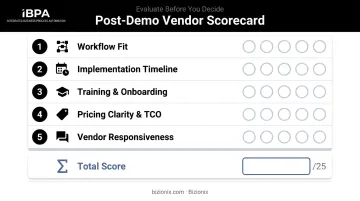
After each demo, score the vendor on these dimensions:
- How closely the demo reflected your actual workflows
- Implementation timeline and what it includes
- Training and onboarding support quality
- Clarity of the pricing proposal and total cost of ownership
- Vendor's responsiveness during the pre-demo process (this predicts support quality post-sale)
How We Chose the Best WMS Systems
Evaluation Criteria
Choosing a WMS without a clear evaluation framework is one of the fastest ways to end up with the wrong system. We assessed each shortlisted platform across these dimensions:
- India-market fit — GST compliance readiness, local support availability, and suitability for MSME-scale operations
- Core features — real-time inventory tracking, multi-location management, and order fulfillment capabilities
- Deployment model — cloud vs. on-premise; cloud WMS is forecast to account for 61.66% of global WMS market share in 2026, reflecting where the market is heading
- Scalability — grows with the business without requiring a costly full replacement
- Ease of use — built for warehouse teams, not just IT administrators
- Integration capability — connects with existing ERP, accounting, and e-commerce tools without requiring custom development
The Common Mistake Buyers Make
Many businesses choose WMS based on brand recognition or the lowest quoted price — without checking whether the system fits their actual warehouse processes, integrates with their existing tools, or can scale with growth.
A WMS that looks affordable upfront but requires expensive customisation, lacks GST e-invoicing, or needs a separate accounting integration will cost significantly more over two to three years. Evaluating all these dimensions together — not just features and price — is how businesses avoid a second implementation within 36 months.
Conclusion
Selecting a WMS is more than a software purchase — an infrastructure decision that will affect inventory accuracy, fulfillment speed, labour efficiency, and customer satisfaction for years.
The right system is the one that fits your specific warehouse workflows, compliance obligations, and growth trajectory — not just the most feature-rich or least expensive option on the shortlist.
Before finalising any decision, evaluate each shortlisted platform against these criteria:
- Scalability — can the system grow with your warehouse volumes and SKU count?
- Total cost of ownership — factor in implementation, training, and ongoing support fees
- Vendor support quality — especially for go-live issues and compliance updates
- India-specific readiness — GST compliance, e-invoicing integration, and multi-location support
For Indian MSMEs that need a GST-ready, cloud-based platform combining warehouse management with accounts, sales, and procurement in a single login, Bizionix offers a unified ERP-WMS built for this market. A free demo is available if you want to explore the platform before committing.
Frequently Asked Questions
What are the key KPIs for warehouse management?
The most important warehouse KPIs include inventory accuracy, order fulfilment rate, order picking accuracy (best-in-class benchmarks place this at ≥99.68%), on-time shipment rate, and warehouse capacity utilisation. A good WMS tracks these automatically through built-in reporting dashboards, removing the need for manual data collection.
What are the types of warehouse management systems?
Three main types exist:
- Standalone/on-premise WMS — high customisation, higher upfront cost
- Cloud-based SaaS WMS — lower cost, faster deployment, subscription-based
- ERP-integrated WMS — unified control across finance, inventory, and warehouse operations in one system
Is warehouse management software difficult to learn?
Modern cloud-based WMS platforms are designed for ease of use. Most offer role-based dashboards, mobile-friendly interfaces, and intuitive workflows that warehouse floor staff can navigate quickly. Vendor training and onboarding support reduce the learning curve — ask about this specifically during your demo.
What is the difference between a WMS and an ERP?
An ERP manages business-wide processes — finance, HR, procurement, and sales. A WMS focuses specifically on warehouse operations. Many modern platforms, including Bizionix, combine both into a single integrated system, so businesses do not need to manage two separate tools or build a custom integration between them.
How long does it take to implement a WMS?
Timelines vary by complexity. A cloud-based WMS for an SME can go live in weeks, while enterprise systems with deep customisation may take several months. Ask vendors for a realistic implementation roadmap during the demo — and request references from businesses of comparable size.
How much does warehouse management software cost for Indian businesses?
Costs vary widely by system type. Cloud-based SaaS platforms like Bizionix start as low as ₹999 per year for smaller operations, while enterprise systems like SAP EWM and Oracle WMS Cloud are quote-based. Always evaluate total cost of ownership — including implementation, training, and ongoing support — not just the subscription fee.