Introduction
If your sales team tracks leads in a spreadsheet, follows up via WhatsApp, and stores customer notes in a personal diary — you're not alone. According to a 2025 India SME Forum and Meta survey of 7,835 MSMEs, 46.2% of Indian MSMEs still operate fully offline, while thousands more rely on WhatsApp and email as their primary customer communication tools. The result? Missed follow-ups, duplicate outreach, and deals that die quietly because nobody remembered to call back.
Cloud-based CRM software addresses this by replacing scattered manual processes with one organised, accessible system — without adding operational complexity.
This guide walks you through what cloud CRM actually is, how it compares to on-premise software, the key benefits, must-have features, and how to choose the right platform for your business.
Key Takeaways
- Cloud CRM is customer relationship management software hosted online — no servers, no local installation required
- Access customer data from any device, anywhere, in real time
- Key benefits include lower upfront costs, automatic updates, easy scalability, and stronger data security
- Especially valuable for Indian MSMEs that need enterprise-level tools without enterprise-level infrastructure costs
- When evaluating options, prioritise ease of use, scalability, and GST compliance support
What Is Cloud-Based CRM Software?
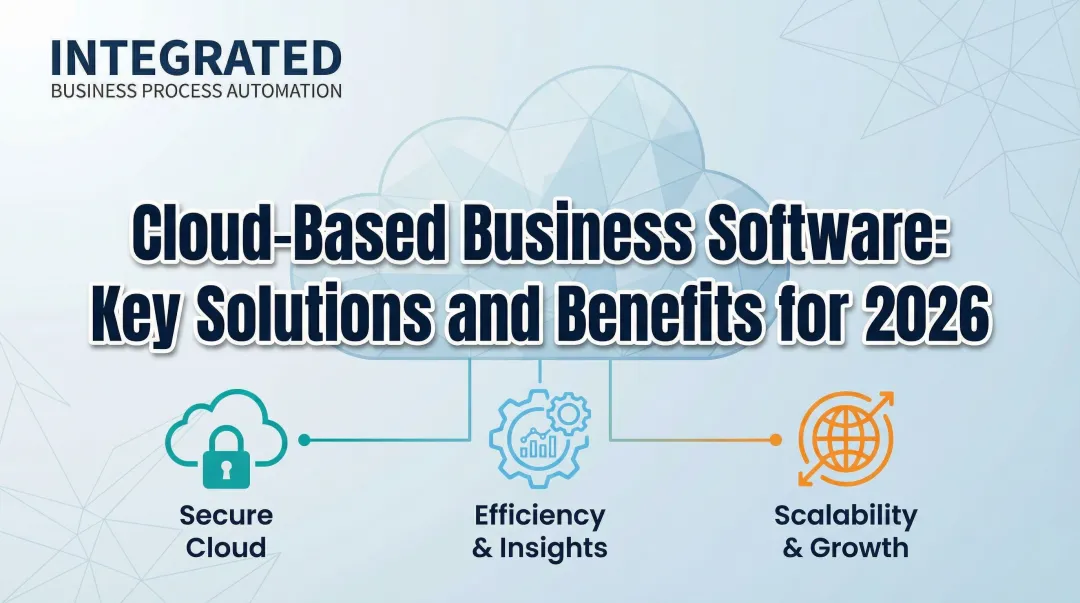
Cloud-based CRM is software that manages your customer relationships — contacts, sales pipelines, interaction history, and deal status — hosted on the vendor's servers and accessed through a browser or mobile app. You don't install anything locally, and there's no server to buy or maintain. You simply log in and your data is there.
This model is also called SaaS (Software-as-a-Service). The CRM provider handles all the infrastructure: storing your data, securing it, and pushing updates automatically. Your team gets a fully functional system from day one without involving an IT department.
What "Cloud" Actually Means Here
Your data lives on remote servers managed by the CRM vendor — not on your office computers or a local server. This matters because:
- Multiple users across different locations can access the same up-to-date customer records simultaneously
- A sales rep in the field sees the same pipeline as the manager back at the office
- No single device holds the only copy of your customer data
The global SaaS CRM market was valued at USD 90,301.6 million in 2024, projected to grow at 12.2% CAGR through 2030 — reflecting how decisively cloud delivery has displaced on-premise systems worldwide. Closer to home, RIS research across 2,882 Indian MSMEs found only 13% have adopted CRM software — meaning most businesses are still leaving significant efficiency gains untapped.
Cloud CRM vs. On-Premise CRM: Key Differences
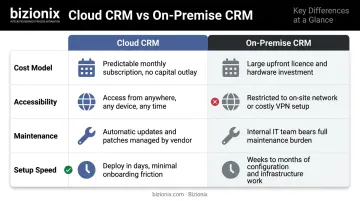
The two main CRM deployment models — cloud and on-premise — differ in cost structure, accessibility, and who carries the maintenance burden.
On-premise CRM requires purchasing physical servers, installing software on your own hardware, and hiring IT staff to manage updates and security. The system is typically accessible only from office computers, and every upgrade demands internal IT work that can disrupt daily operations.
Cloud CRM removes that overhead entirely. Here's how the two compare across the dimensions that matter most:
| Dimension | Cloud CRM | On-Premise CRM |
|---|---|---|
| Cost model | Monthly/annual subscription | Large upfront licence + hardware spend |
| Accessibility | Any device, anywhere, anytime | Usually office-only |
| Maintenance | Vendor handles everything | Your IT team's responsibility |
| Setup speed | Days to weeks | Months, often longer |
Why the Shift Is Accelerating
Remote and hybrid work changed what businesses need from software. Field sales teams, multi-location operations, and businesses without dedicated IT departments can't function well on office-bound systems. Indian MSMEs, which typically lack both the capital for on-premise infrastructure and the in-house IT resources to maintain it, find cloud CRM to be the practical default.
The numbers reflect where adoption currently stands: according to Research and Information System (RIS) data, cloud computing uptake among Indian MSMEs is just 14% overall, climbing to 28.43% among firms with more than 50 employees. The businesses that have moved to cloud tools tend to be the ones growing fastest.
Key Benefits of Cloud-Based CRM Software
Lower Cost and Faster ROI
No hardware purchases. No infrastructure setup. No dedicated IT headcount. Businesses pay a predictable subscription — monthly or annually — and can start using the system almost immediately.
A 2023 Zoho survey of U.S. small businesses found 42% of CRM users saved 5–10 hours per week, and 47% rated their customer operations as very efficient — compared to just 30% among non-CRM users. Time savings at that scale translate directly into revenue capacity.
Anytime, Anywhere Access
Your sales team doesn't work only from a desk. Cloud CRM means a field rep can pull up a customer's full interaction history before walking into a meeting, update deal status from a phone after the conversation, and flag a follow-up — all without returning to the office.
Salesforce's research found that sales professionals with mobile CRM access are 24% more likely to meet annual quotas. For Indian businesses with distributed teams or active field sales operations, this is a concrete performance advantage.
Automatic Updates and Zero Maintenance
The CRM provider handles all maintenance, bug fixes, and software upgrades — without forced downtime or manual installation processes on your end. Features improve over time without you doing anything.
On-premise systems require IT planning, testing, and scheduled downtime for every update cycle — a recurring cost in time and resources that cloud users simply don't have.
Scalability Without Disruption
Need to add five users? Activate a new module? Expand to a second branch? You adjust your subscription. No hardware to upgrade, no infrastructure to overhaul, no IT project required.
This is particularly relevant for MSMEs expecting rapid growth. Bizionix, for example, is designed so businesses can start with foundational modules and activate more capabilities as they scale — without switching platforms or migrating data mid-growth.
Enterprise-Grade Security
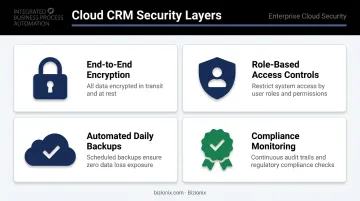
Most small businesses lack the resources to maintain enterprise-grade security on their own infrastructure. Cloud CRM providers handle this by default — leading platforms invest in:
- End-to-end encryption for data in transit and at rest
- Role-based access controls so users only see what they need
- Automated daily backups with long-term retention
- Ongoing compliance monitoring and security certifications
For Indian MSMEs handling customer data across distributed teams, this built-in security layer removes a significant operational risk.
Essential Features to Look For in Cloud CRM Software
Not every CRM is built the same. These are the capabilities that separate useful platforms from overpriced tools that add complexity without results.
Contact and Lead Management
A centralised database that stores all customer details, interaction history, and deal status — accessible to any authorised team member instantly. Good contact management eliminates duplicate outreach, ensures faster follow-ups, and ensures every conversation starts with full context, not guesswork.
Sales Pipeline Visibility
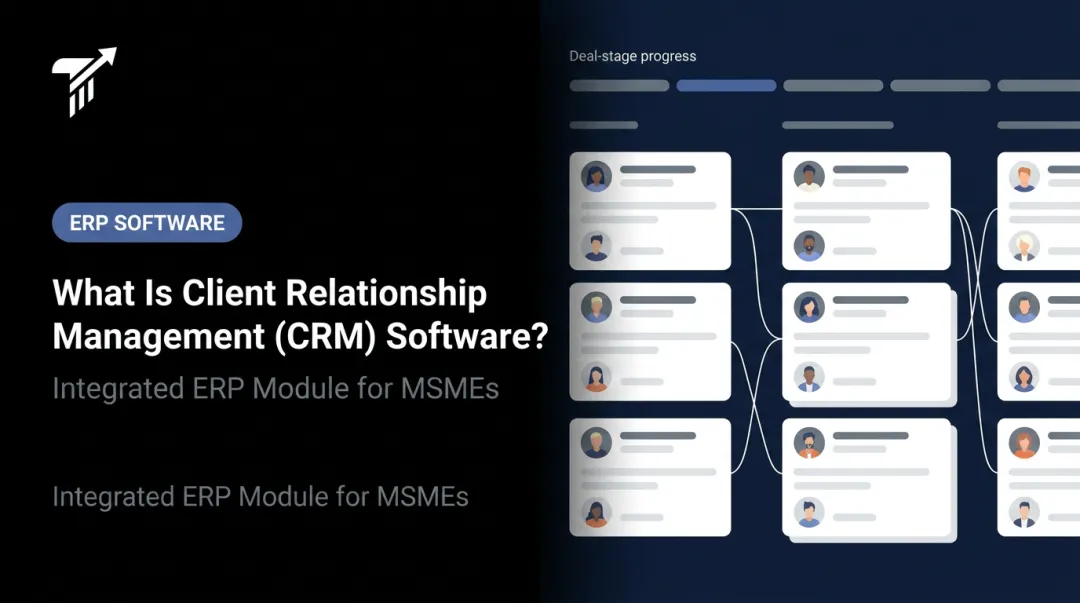
Visual tracking that shows where every lead sits in the buying journey — from first contact to closed deal. This helps managers forecast revenue without relying on gut feel, and helps sales reps prioritise their highest-value opportunities rather than spending equal time on every lead.
Reporting and Analytics
Real-time dashboards surfacing conversion rates, deal velocity, and team performance — without manual data compilation. Clean, structured data directly supports better business decisions. The G2 2024 Buyer Behavior Report found 75% of CRM buyers rated AI functionality as important or very important, reflecting how central data intelligence has become to CRM value.
Workflow Automation
Automated follow-up emails, lead assignment rules, reminder triggers, and record updates reduce the manual burden on sales teams and eliminate the risk of leads going cold because someone forgot. For MSMEs running lean teams, automation isn't a luxury — it's how a five-person sales team punches above its weight.
Third-Party Integrations
G2's research identified integration with other systems as the top consideration for CRM buyers. Your CRM needs to connect with the tools already in your workflow — accounting software, invoicing systems, email platforms. For Indian businesses, this specifically means integration with GST-ready billing and e-invoicing systems.
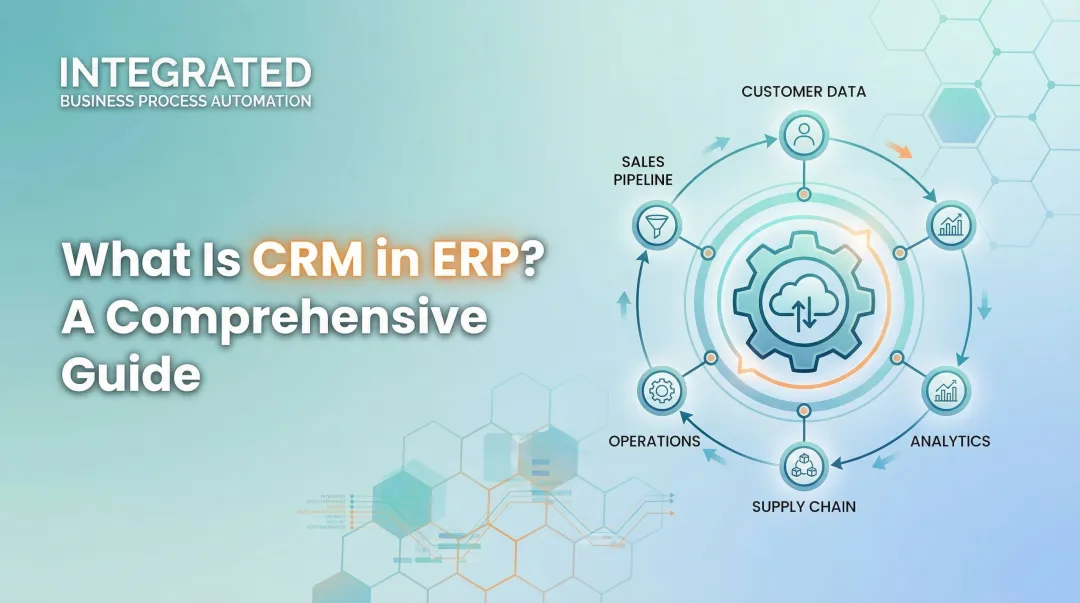
Bizionix addresses this through its unified architecture. The CRM module sits within the same platform as GST-compliant accounting, e-invoicing with direct IRP connection for instant IRN generation, and inventory management. This eliminates the data silos that occur when these functions run on separate tools.
Who Should Use Cloud-Based CRM Software?
Almost any business that manages customer relationships at scale can benefit — but some segments see results fastest.
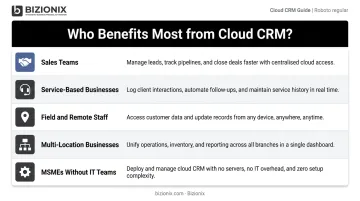
Cloud CRM is especially valuable for:
- Sales teams juggling multiple leads who need live pipeline visibility in one place
- Service-based businesses where repeat customer relationships drive revenue
- Field and remote staff who need customer data accessible outside the office
- Multi-location businesses where a single data source eliminates coordination gaps between branches
- MSMEs without dedicated IT teams who need enterprise-grade tools at a fraction of the cost
The RIS data makes the opportunity stark: CRM adoption is only 5.70% among firms with fewer than 10 employees but rises to 26.95% among firms with more than 50 workers. Smaller businesses are underserved, not unsuited — and cloud CRM is precisely what closes that gap affordably.
That adoption gap points directly at who stands to gain most. CA firms managing multiple client portfolios, manufacturing companies tracking distributor relationships, and franchise networks coordinating across cities all fit this profile. The common thread: customer data scattered across people, devices, and informal channels — all of which a cloud CRM consolidates into one place.
How to Choose the Right Cloud CRM for Your Business
Map Your Process Before Evaluating Tools
Start by documenting your current sales process: where leads come from, how they're tracked, and where deals get stuck. The list of features that would directly fix those gaps is your requirements list. Paying for a platform full of capabilities you'll never use is a common and expensive mistake.
Prioritise Ease of Use and Onboarding Support
A CRM that requires months of training defeats the purpose. The Zoho survey found 53% of small businesses cited ease of use as their top CRM selection criterion — above cost and feature depth. Look for vendors offering fast setup, intuitive interfaces, and responsive support, especially for teams that aren't highly technical.
Bizionix includes a 14-day free trial on its base plan, comprehensive implementation support, and multiple contact channels including live support and a ticketing system — designed to get businesses operational quickly without requiring consultants.
Verify Integration and Compliance Fit
For Indian businesses, this step directly affects day-to-day operations. Verify that the CRM integrates with your accounting or invoicing software and handles GST workflows natively. A solution that requires you to manually reconcile CRM data with your billing system creates the same fragmentation you're trying to escape.
Bizionix bundles CRM functionality with GST-ready accounting, e-invoicing with automatic IRN generation, and GSTR-1 auto-population — all within a single platform, making compliance a byproduct of normal operations rather than a separate exercise.
Assess Scalability and Total Cost of Ownership
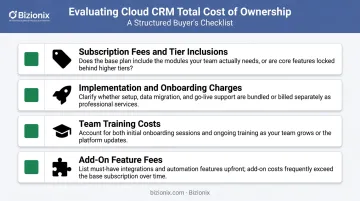
Once you've confirmed integration fit, look at the full cost picture before committing. Compare honestly across these dimensions:
- Subscription fees and what's actually included at each tier
- Implementation or onboarding charges
- Training costs for your team
- Add-on fees for features you'll realistically need
Bizionix NEO starts at ₹999 per year with CRM included, while the Enterprise plan offers full access to 12+ core modules with custom pricing for larger operations. Confirm the platform can add users, departments, or modules as your business grows — without a costly re-implementation down the line.
Frequently Asked Questions
What is cloud-based CRM software?
Cloud-based CRM is customer relationship management software hosted on the vendor's servers and accessed via the internet. It requires no on-site hardware or local installation, and can be accessed from any device with an internet connection.
How is cloud CRM different from on-premise CRM?
On-premise CRM requires businesses to purchase and maintain their own servers and infrastructure. Cloud CRM is managed entirely by the vendor, which means lower upfront costs, faster setup, automatic updates, and access from anywhere — not just the office.
Is cloud CRM software secure for storing customer data?
Reputable cloud CRM providers use encryption, role-based access controls, and automated backups to protect data. For most small businesses, this level of security exceeds what they could realistically implement on their own local infrastructure.
Can cloud CRM integrate with other business tools?
Most modern cloud CRMs are built to connect with email platforms, accounting software, and invoicing systems. Integration capability should be a key evaluation factor — particularly for Indian businesses needing GST-compliant billing integration.
How much does cloud-based CRM software typically cost?
Cloud CRM pricing is subscription-based. India-specific platforms like Bizionix bundle CRM within broader ERP packages starting at ₹999 per year, making them significantly more affordable than international tools (which typically run $12–$200+ per user per month) or on-premise alternatives.
Which types of businesses benefit most from cloud-based CRM?
Cloud CRM delivers the most immediate value for MSMEs, field sales teams, multi-location businesses, and service-based companies that need real-time customer data across teams. These businesses gain the most from cloud access without the cost of on-premise infrastructure.