Introduction
Running a distribution business in India today means juggling multi-warehouse inventory, coordinating procurement across vendors, tracking inward and outward supply, and staying GST-compliant — often across disconnected spreadsheets and standalone accounting tools.
When one system holds your stock data, another holds your invoices, and a third tracks your orders, the gaps between them become a direct source of margin loss.
For growing Indian distributors, the ERP decision determines whether you scale with control or lose ground to operational chaos. Nowhere is that risk more concrete than in compliance: GST penalties under Section 122 of the CGST Act for non-compliant invoicing can reach ₹10,000 or the full tax amount, whichever is higher — making it a financial exposure, not just an admin task.
This guide evaluates 10 distribution ERP solutions on functionality, GST readiness, deployment flexibility, and real-world fit — so you can make the call with confidence rather than guesswork.
Key Takeaways
- Distribution ERP integrates inventory, procurement, order management, warehouse operations, and financials into one platform
- For Indian distributors, GST e-invoicing readiness, IRN generation, and multi-location inventory visibility are non-negotiable requirements
- This list covers enterprise platforms (SAP, Oracle, Microsoft) alongside India-focused MSME options like Bizionix, Tally Prime, and Zoho
- Evaluate platforms on distribution-specific functionality, GST readiness, scalability, and total cost of ownership
- No single ERP fits every distributor — match the platform to your size, complexity, and growth stage
What Is Distribution ERP Software?
Distribution ERP is an enterprise resource planning system built for businesses that buy, store, and resell products — unlike generic accounting software or standalone inventory tools, it connects inventory management, order processing, procurement, warehouse operations, and financials into a single platform so every department works from the same data.
That single-platform model matters most where fragmentation is costliest. For Indian distributors, these are the pressure points that a generic system cannot handle:
- GST-compliant invoicing across multiple product categories and tax slabs
- Multi-location stock visibility across branches and warehouses without manual reconciliation
- Accurate outward and inward supply tracking for GSTR-1 filing and e-way bill compliance
- Faster billing cycles that reduce days outstanding and improve cash flow
Fragmented systems consistently fail on these requirements. A distributor running Tally for accounts, a separate WMS, and Excel for order tracking will hit a ceiling — usually when SKU volumes grow, new branches open, or GST audits arrive.
10 Best Distribution ERP Software Solutions
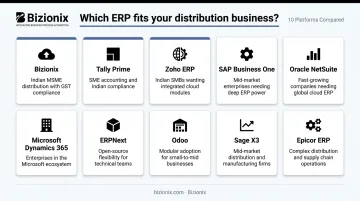
Before diving into individual platforms, here's a quick-reference guide to help you find the right fit:
- Bizionix — Best for Indian MSMEs needing GST-native ERP at an accessible price point
- SAP Business One — Best for growing SMEs needing structured ERP with deep customisation
- Oracle NetSuite — Best for mid-to-large distributors with complex, multi-entity operations
- Microsoft Dynamics 365 Business Central — Best for distributors already embedded in the Microsoft ecosystem
- Tally Prime — Best entry-level option for small Indian distributors new to digital operations
- Odoo ERP — Best for startups and businesses with in-house technical capability
- Zoho Inventory / Zoho ERP — Best affordable cloud option for Indian SME distributors
- Acumatica Distribution Edition — Best for large teams or seasonal workforces needing flexible licensing
- Sage X3 — Best for mid-market distributors needing configurable financial management
- Epicor Prophet 21 — Best purpose-built ERP for industrial, MRO, and wholesale distributors
Bizionix by IIS-LLP
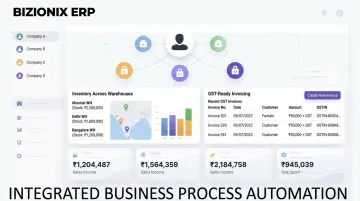
A cloud-based ERP built specifically for Indian MSMEs and mid-sized distribution businesses, Bizionix is developed by IIS-LLP (a subsidiary of Protocol India Private Limited), backed by over two decades of industry experience. It covers inventory management, warehouse operations, procurement, order-to-cash, GST accounting, and multi-company management in a unified platform.
What separates Bizionix from most options on this list is its depth of India-specific compliance. The platform integrates directly with the GST Invoice Registration Portal (IRP) via API, generating IRNs in real time at the point of invoicing — with pre-validation that prevents rejections before submission. GSTR-1 is auto-populated from transaction data, and the system supports GST-compliant invoice formats in both PDF and JSON.
For multi-location distributors, a single secure login provides access across all entities. Key operational controls include:
- Switch between branches, warehouses, or GST-registered entities without logging out
- Maintain independent books of accounts per entity
- Apply role-based access controls so each team member sees only what's relevant to their function
The NEO plan starts at ₹999 per year — covering nine core modules including sales invoicing, warehouse management, purchase management, accounts, and reporting — making it one of the most accessible entry points for small distributors moving off spreadsheets.
| Key Features | Inventory tracking, GST-ready accounting, real-time IRN generation, multi-warehouse visibility, procurement management, role-based access |
| Best For | Indian MSMEs, growing distributors, multi-location distribution businesses |
| Deployment | 100% cloud-based |
SAP Business One
SAP Business One is a well-established ERP deployed across small to mid-sized businesses worldwide, covering procurement, inventory, warehouse management, sales, and financials with strong customisation capabilities and a wide partner ecosystem across India.
It differentiates through serial, lot, and batch tracking, integrated supply chain workflows, and a proven track record with Indian distributors who need structured process control. Implementation cost and complexity are meaningfully higher than MSME-focused alternatives.
| Key Features | Lot and serial tracking, warehouse automation, procurement management, financial reporting |
| Best For | Growing SMEs and mid-sized distributors needing structured ERP with deep customisation |
| Deployment | Cloud and on-premise |
Oracle NetSuite
NetSuite's wholesale distribution solution serves mid-to-large distributors with coverage across financials, multi-warehouse inventory, supply chain, CRM, procurement, and omnichannel order management on a single platform. Its India localisation includes GST on purchases and sales, TDS, TCS, e-way bill, and electronic invoicing support.
NetSuite suits distributors with multi-entity operations, complex product structures, or high transaction volumes who need sophisticated financial reporting across the order-to-cash cycle. Its depth over simplicity makes it best suited for businesses that have outgrown mid-market tools.
| Key Features | Multi-location inventory, demand planning, native eCommerce integration, advanced financials, real-time supply chain visibility |
| Best For | Mid-to-large distributors with complex, multi-location or multi-entity operations |
| Deployment | Cloud-only |
Microsoft Dynamics 365 Business Central
A versatile mid-market ERP that unifies finance, inventory, purchasing, sales, and warehouse operations. Business Central is widely adopted by distribution companies already embedded in the Microsoft ecosystem — Office 365, Teams, and Power BI all integrate natively.
Its extensive add-on marketplace lets distributors extend functionality without custom development. Microsoft maintains an India Local Functionality hub covering localisation requirements for Indian businesses. Deployment options span cloud, on-premise, and hybrid.
| Key Features | Real-time inventory tracking, automated reordering, CRM integration, Power BI analytics, multi-warehouse visibility |
| Best For | Small-to-mid-sized distributors already in the Microsoft ecosystem needing extensibility |
| Deployment | Cloud, on-premise, or hybrid |
Tally Prime
One of the most widely used business management solutions among Indian distributors and traders, Tally Prime covers accounting, inventory, GST billing, and basic order management. It supports IRN generation, e-invoicing, e-way bills, and QR code printing natively. Official plans start at ₹750.
Tally Prime is best suited as an entry point for smaller distributors new to digital operations. It has limited warehouse management depth and typically requires add-ons or migration to a full ERP as operational complexity grows.
| Key Features | GST billing, inventory management, IRN generation, e-way bill support, financial accounting |
| Best For | Small Indian distributors and traders seeking an affordable, GST-compliant starting point |
| Deployment | On-premise (with cloud-hosting options) |
Odoo ERP
Odoo takes a modular, open-source approach — distributors can activate dedicated modules for inventory, warehouse management, purchase, sales, and accounting as needed. India localisation enables GST features including e-invoice, e-waybill, GST e-filing, and GST data fetching once GST registration is configured.
Its per-module licensing lets distributors start with core functions and expand. The trade-off: implementation effort increases substantially with customisation, and businesses without in-house technical capability typically need a local implementation partner.
| Key Features | Modular architecture, warehouse management, purchase and sales automation, multi-currency, eCommerce integration |
| Best For | Startups, small distributors, and businesses with in-house technical capability |
| Deployment | Cloud and on-premise |
Zoho Inventory / Zoho ERP
Zoho's suite — particularly Zoho Inventory and Zoho Books — offers an affordable, cloud-native option for Indian SME distributors, with built-in GST compliance, order management, e-invoicing (connected to IRP), and integration across Zoho's CRM and analytics ecosystem. Zoho Invoice is free for Indian businesses.
It appeals to small-to-mid-sized distributors for its MSME-friendly pricing and local compliance support. Warehouse management depth is limited compared to full-suite distribution ERPs.
| Key Features | GST-compliant invoicing, IRP-connected e-invoicing, purchase and sales orders, multi-warehouse tracking, Zoho ecosystem integration |
| Best For | Indian SME distributors needing affordable, cloud-based GST-ready order and inventory management |
| Deployment | Cloud-only |
Acumatica Distribution Edition
Acumatica covers finance, inventory, warehouse management, purchasing, and sales for small-to-mid-sized distributors. What sets it apart is a consumption-based licensing model — unlimited users, priced by resource usage rather than per seat.
This makes it practical for distribution businesses with large front-line teams or seasonal workforce fluctuations, where per-user pricing would otherwise escalate costs. India localisation is available via the Acumatica marketplace.
| Key Features | Unlimited user licensing, warehouse and inventory management, real-time dashboards, purchase automation, flexible workflow configuration |
| Best For | Growing distributors with large teams or seasonal staffing needing flexible, cloud-first ERP |
| Deployment | Cloud-native |
Sage X3
A mid-market ERP offering configurable financial management, inventory control, batch and lot tracking, and supply chain capabilities. Sage X3 targets distributors who need more structure than entry-level tools but less overhead than enterprise platforms.
It differentiates through an API-driven integration layer for connecting WMS, CRM, and eCommerce systems, with flexible deployment options for businesses with specific data residency requirements.
| Key Features | Lot and batch tracking, multi-entity financial management, configurable order and pricing workflows, API integration layer |
| Best For | Small-to-mid-sized distributors needing configurable core ERP with solid financial management |
| Deployment | Cloud and on-premise |
Epicor Prophet 21
Epicor Prophet 21 is built exclusively for wholesale distributors, with deep functionality covering complex pricing, warehouse operations, replenishment, EDI integration, and vendor collaboration.
Prophet 21 stands out for its purpose-built distribution logic: contract pricing, rebate management, and industry-specific reporting. It's most valuable for industrial, MRO, or traditional wholesale distributors who want deep vertical functionality without extensive custom development.
| Key Features | Wholesale distribution workflows, EDI capabilities, complex pricing and rebates, warehouse automation, real-time operational reporting |
| Best For | Industrial, MRO, and wholesale distributors needing purpose-built distribution ERP |
| Deployment | Cloud and on-premise |
How to Choose the Right Distribution ERP Software
The most common mistake distributors make when evaluating ERP is selecting based on brand recognition or subscription cost alone. The right question is whether the system handles your specific workflows — order-to-cash cycles, multi-location inventory, GST invoicing, and warehouse operations — before you sign anything.
GST Compliance Is Non-Negotiable
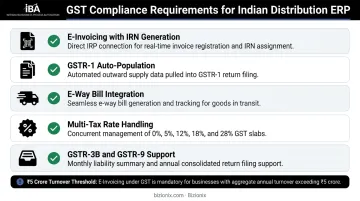
For Indian distribution businesses, GST readiness goes beyond adding a tax field to an invoice. Verify that any shortlisted ERP supports:
- E-invoicing with direct IRN generation via IRP connection
- GSTR-1 auto-population from transaction data
- E-way bill integration (required for consignments above ₹50,000 under Rule 138 of the GST Act)
- Multi-tax rate handling on single invoices across GST slabs
- GSTR-3B and GSTR-9 filing support
Per GST e-Invoice Notification No. 10/2023, e-invoicing is mandatory for businesses with aggregate turnover above ₹5 crore. Non-compliance triggers penalties under Section 122. That's an avoidable exposure when ERP platforms with native GST compliance are readily available.
Assess Deployment and Scalability
Once compliance is confirmed, the next decision is how the system is hosted. Cloud-based ERP offers real-time visibility across locations, lower upfront infrastructure costs, and the remote access that distributed teams need. On-premise may suit businesses with strict data residency requirements or limited internet reliability.
Beyond deployment, confirm the system can grow with your business:
- Can it handle growing SKU counts without performance degradation?
- Does adding a new warehouse or branch require a platform change?
- Can additional users be added without per-seat cost escalation?
Calculate Total Cost of Ownership
Scalability decisions directly shape your long-term costs — and subscription fees are just one part of that picture. Before deciding, account for:
- Implementation work: configuration, data migration, and user training often run separately from licensing fees
- Customisation fees for workflows the platform doesn't handle out of the box
- Ongoing support, which may be included or billed as an add-on depending on the vendor
- Upgrade costs — especially relevant for on-premise deployments
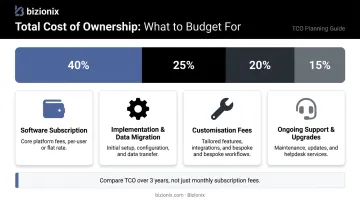
A light cloud subscription and a solution requiring a multi-lakh implementation project are not comparable on licensing fees alone. Match the platform to your business size, operational complexity, and three-year growth trajectory.
Conclusion
Choosing a distribution ERP is an operational decision as much as a technology one. The right platform reduces financial leakage, eliminates manual reconciliation, accelerates billing cycles, and gives every department a single, accurate source of data.
Shortlist two or three platforms based on your operational complexity, team size, GST compliance requirements, and growth plans. Then evaluate through live demos using your own real-world scenarios — not vendor-scripted examples.
Indian MSMEs and distribution businesses that need GST-ready accounting, real-time IRN generation, and multi-location inventory — without SAP-level cost or complexity — can explore Bizionix by IIS-LLP. Built specifically for growing Indian enterprises, it consolidates these capabilities into one platform. Visit bizionix.com or email info@bizionix.com to request a live demonstration.
Frequently Asked Questions
What is an ERP system in distribution?
A distribution ERP is an integrated software platform that manages inventory, purchase orders, sales orders, customer management, and financials in one unified system. It replaces the spreadsheets, standalone accounting tools, and disconnected inventory software that most growing distributors eventually outgrow.
What features should I look for in distribution ERP software?
Baseline requirements include multi-location inventory tracking, order and procurement management, warehouse operations, GST-compliant invoicing with IRN generation, and real-time reporting. These should be native to the platform — not bolted on via third-party plugins — so they work reliably across every workflow.
Is cloud ERP better than on-premise for distribution companies?
Cloud ERP is the better fit for most growing distributors: lower upfront costs, real-time access across locations, automatic compliance updates, and faster implementation. On-premise may suit businesses with strict data residency requirements or locations with unreliable internet connectivity.
Do Indian distribution companies need GST-compliant ERP software?
GST compliance is mandatory for Indian businesses, and the ERP should support e-invoicing with direct IRN generation, e-way bill integration for consignments above ₹50,000, GSTR report generation, and multi-tax rate handling. Basic invoice printing with a GST field added does not count as real compliance support.
How long does it take to implement distribution ERP software?
Cloud-based mid-market deployments typically go live in 3–6 months; multi-location or multi-entity setups with complex integrations can take 6–12 months. Data migration readiness is the biggest variable — businesses with clean master data go live consistently faster than those migrating from fragmented spreadsheets.
How much does distribution ERP software cost for Indian MSMEs?
Pricing ranges from ₹999 per year for entry-level MSME platforms like Bizionix NEO to quote-based enterprise systems with significant implementation costs. Always calculate total cost of ownership — software subscription, implementation, training, and ongoing support — rather than comparing subscription fees in isolation.