Introduction
Modern travellers often choose hotels based on feel as much as price. A clunky booking page, an indifferent check-in, or an ignored complaint can push a guest toward a competitor — and a scathing public review. The reverse is just as powerful: one genuinely memorable stay can create a repeat guest who books directly, spends more, and tells others.
The problem most hotels face is structural. Guest experience is managed reactively — complaints get resolved, requests get fulfilled, but there's no deliberate architecture behind any of it. The result is inconsistent service, missed revenue opportunities, and guests who leave feeling "fine" rather than loyal.
What follows covers what guest experience management actually means, why it directly affects revenue, how to approach each stage of the guest journey, and which strategies and technologies make the difference for growing hotel properties.
TLDR
- Guest experience management (GEM) is a proactive, end-to-end discipline covering every guest touchpoint
- Review scores directly affect booking conversion and revenue per available room
- The guest journey has five distinct stages, each requiring deliberate strategy
- Unified guest data, staff training, and integrated technology are the core enablers
- Metrics like NPS, repeat booking rate, and upsell conversion measure GEM performance
What Is Guest Experience Management?
Guest Experience Management (GEM) is the deliberate, systematic approach to designing, delivering, and continuously improving every interaction a guest has with your property — from the moment they search for a hotel to weeks after they check out. It spans strategy, operations, and culture — not a single department's responsibility.
GEM vs. Customer Service: A Critical Distinction
Many hoteliers conflate the two, but they operate differently:
- Customer service is reactive and transactional — resolving a complaint, delivering extra towels, fixing a billing error
- GEM is proactive and holistic — every website visit, booking confirmation, in-room experience, and post-stay email is part of it, not just the moments when something breaks
The distinction matters operationally. A hotel focused only on customer service waits for problems. One practising GEM designs experiences so fewer problems occur in the first place — and recovers faster when they do.
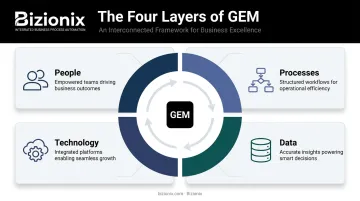
The Four Layers of GEM
Effective GEM runs on four interconnected components:
- People — staff culture, training, and empowerment to act on guest needs
- Processes — documented SOPs at every journey stage, not just front desk
- Data — unified guest profiles capturing preferences, history, and behaviour across stays
- Technology — systems that connect these layers in real time
Centralised Data as the Backbone
Hotels collect guest information from dozens of sources: booking engines, OTA reservations, front desk interactions, F&B orders, housekeeping observations, satisfaction surveys. The challenge is that this data typically sits in separate systems that don't talk to each other.
Breaking down those silos — centralising everything into a single Property Management System (PMS) or integrated platform — creates a complete, actionable view of each guest. That foundation makes everything else in GEM possible.
From there, guest segmentation becomes practical. Once profiles are consolidated, you can group guests by travel purpose, spending habits, length of stay, or frequency — business travellers, leisure couples, families, retirees. Those segments drive personalised communication and service delivery at every touchpoint.
Why GEM Matters for Hotel Operations
Review Scores Drive Bookings
According to a Tripadvisor study, 79% of users are more likely to book the hotel with the higher bubble rating when two properties are otherwise equal, and 52% would not book a hotel with no reviews at all. Review score directly determines whether a potential guest clicks "book" or moves on.
Cornell's Centre for Hospitality Research found that a 1% increase in a hotel's Global Review Index correlates with up to 1.42% RevPAR growth — and a one-point improvement on a 5-point review scale supported an 11.2% price premium without losing occupancy.
Revenue Beyond Reviews
Satisfied, loyal guests change behaviour in measurable ways:
- They book directly rather than through OTAs, eliminating commission costs that typically run 15–30% of booking value
- They respond to personalised upsell offers — room upgrades, F&B packages, spa access — at higher rates
- They return. Acquiring a new guest costs 5 to 10 times more than retaining an existing one, according to HospitalityNet's loyalty analysis
Operational Efficiency
When guest preferences are captured in advance and departments share live data, staff spend less time firefighting and more time delivering. The operational gains compound quickly:
- Fewer escalations reaching management
- Cleaner shift handovers with shared context
- Faster service request resolution
Each of these reduces operational costs and staff stress while directly improving the guest experience.
The Hotel Guest Journey: Five Stages to Manage
Most hotels focus their energy on the in-stay period. GEM requires deliberate strategy at every stage.
Stage 1 — Pre-Booking
The guest experience begins before any reservation is made. Potential guests browse review sites, social media, and your website to compare options. Hotels need accurate and compelling information accessible across all channels, active review management, and fast responses to queries — ideally via AI chatbot or live chat. A slow or confusing booking process pushes guests straight to a competitor with a smoother path — before you even know they existed.
Stage 2 — Pre-Arrival
The window between booking confirmation and arrival is one of the most underused windows in hospitality. Use it to:
- Confirm reservation details and set expectations
- Highlight amenities relevant to the guest's profile
- Offer room upgrades or add-ons with a personalised prompt
- Provide mobile check-in options that reduce front desk load
Guests who arrive knowing what to expect — and feeling noticed — start the stay at a higher baseline.
Stage 3 — In-Stay
This is the most complex stage. Guests are evaluating multiple dimensions simultaneously:
- Room quality and cleanliness on arrival
- Speed and warmth of staff responses
- How quickly service requests are fulfilled
- Personalised touches that signal the hotel knows them
Digital communication has reshaped what guests expect here.
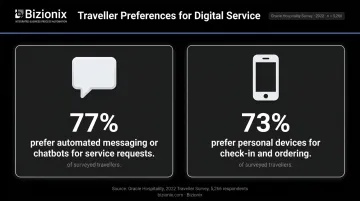
Oracle's 2022 consumer survey of 5,266 travellers found 77% are interested in automated messaging or chatbots for service requests, and 73% prefer using personal devices for tasks like check-in and ordering food.
Real-time inter-department coordination makes or breaks this stage. When the front desk, housekeeping, and F&B teams share the same live guest data, requests move faster and service feels seamless rather than stitched together.
Stage 4 — Departure
A poor checkout can undo an otherwise excellent stay. Streamline it with:
- Mobile or self-service checkout options
- Digital folios that give guests full billing transparency before they queue
- A warm farewell from staff
This is also the right moment for a prompt, low-friction feedback invitation — while the experience is fresh.
Stage 5 — Post-Stay
The relationship doesn't close at checkout. Automated post-stay emails — a thank-you, a review invitation, a loyalty offer — keep guests connected and give your team another data point on what worked. Hotels that follow up consistently tend to see stronger return visit rates and a steadier flow of public reviews, both of which reinforce future bookings.
Practical Strategies to Improve Hotel Guest Experience
Build Unified Guest Profiles
Train all departments — front desk, housekeeping, F&B — to document guest preferences and observations in a central system. Over time, these profiles inform room assignments, dining recommendations, and welcome gestures that guests actually notice. The data only works when contribution and use are both consistent across teams.
Train for Emotional Connection, Not Just Process Compliance
Speed, cleanliness, and accuracy are the baseline — guests expect them. What guests actually remember is how they felt.
Staff training should go beyond SOPs to develop what hospitality researchers call sub-attributes of service quality: noticing cues, addressing guests by name, acknowledging special occasions, and making small gestures that feel personal rather than scripted. These moments carry particular weight with returning guests.
Personalise by Segment
Once your guest data is centralised, segment communication by travel purpose:
- Business travellers — value frictionless check-in, fast Wi-Fi, and express checkout
- Families — respond to activity recommendations, flexible dining, and child-friendly touches
- Leisure guests — more likely to convert on spa, excursion, or dining package offers
Segment-driven outreach improves both upsell conversion and satisfaction scores, because the offer feels relevant rather than generic.
Empower Guests with Self-Service Options
Millennial and Gen Z guests frequently prefer managing their own experience — choosing room type, ordering via app, accessing hotel information digitally. Providing these options reduces front desk congestion, gives guests more control over their stay, and frees staff to focus on requests that genuinely need a human touch.
Close the Feedback Loop in Operational Time
Collect feedback at multiple points during and after each stay:
- A mid-stay check-in message to catch issues while the guest is still on property
- A post-checkout survey to capture the full experience
- Ongoing review monitoring across platforms like Google and TripAdvisor
Share findings with department heads regularly — not just in monthly management reviews. Hotels that treat feedback as real-time operational data fix problems before guests post negative reviews publicly.
Technology Features That Power Effective GEM
The Must-Have Technology Stack
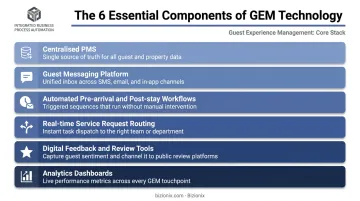
A complete GEM technology setup includes:
- Centralised PMS storing guest profiles, reservation history, and preferences
- Guest messaging platform supporting SMS, WhatsApp, and email
- Automated pre-arrival and post-stay workflows that trigger without manual effort
- Real-time service request routing between departments
- Digital feedback and review management tools
- Analytics dashboards surfacing actionable insights without manual reporting
Why Fragmented Systems Fail
The biggest barrier to GEM for growing hotels isn't budget — it's fragmentation. A separate booking tool, a standalone messaging app, and a disconnected billing system create data silos that force manual reconciliation, cause delays, and give staff an incomplete picture of each guest.
A unified platform eliminates this. Bizionix's HotelEase is built for exactly this challenge, bringing reservations, guest CRM, billing, housekeeping, and analytics into a single cloud-based system for hotels and resorts across India.
The Guest CRM module centralises profiles, preferences, stay history, and loyalty data. The Billing & POS module auto-posts charges and maintains audit-ready folios in real time, replacing the Excel spreadsheets and WhatsApp coordination chains that characterise manual operations.
Why Your PMS Must Be the Integration Hub
Any guest experience tool that doesn't connect to your PMS creates reconciliation work. When guest profiles, reservation data, and billing synchronise automatically, staff can act on guest needs immediately without switching between systems or chasing information across departments.
The practical outcome: faster service, fewer errors, and a consistent view of each guest — regardless of which team member is on shift.
How to Measure the Success of Your GEM Efforts
Key Metrics to Track
| Metric | What It Reveals |
|---|---|
| Net Promoter Score (NPS) | Overall loyalty and likelihood to recommend |
| Online review rating & volume | Public perception and booking conversion impact |
| Guest satisfaction scores | Internal service quality benchmarks |
| Repeat booking rate | Retention effectiveness |
| Service request response time | Operational responsiveness |
| Upsell conversion rate | Personalisation and revenue effectiveness |
As a general benchmark, hotel NPS scores in the 50–60 range are considered strong in most markets — useful context when setting internal targets and tracking progress over time.
The Continuous Improvement Cycle
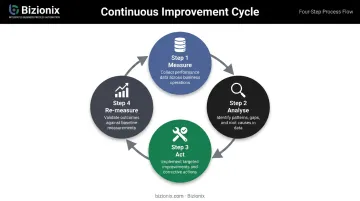
GEM works best as an ongoing operational habit, not a one-off initiative. The cycle looks like this:
- Measure — collect data across all touchpoints
- Analyse — identify patterns and root causes, not just the obvious signals
- Act — implement operational or training changes
- Re-measure — verify the change had the intended effect
Hotels that run through this cycle monthly — rather than quarterly or ad hoc — tend to catch service gaps earlier and recover guest trust faster. The improvements compound over time in ways that one-off audits simply can't replicate.
Sharing the results of that cycle is just as important as running it.
Share Metrics Across Departments
GEM metrics shouldn't live only in management dashboards. Share satisfaction scores and service request response times with housekeeping, F&B, and front desk teams — so every staff member understands how their daily work connects to guest outcomes.
A simple approach: include a 10-minute metrics review in weekly team huddles, highlighting one win and one area to improve. This builds accountability and reinforces a culture where the guest experience is everyone's responsibility, not just the front office's.
Frequently Asked Questions
What is a guest experience management system?
A guest experience management system is a digital platform that helps hotels manage, automate, and personalise every guest interaction — from booking and check-in through in-stay communication and post-checkout follow-up. It integrates with the hotel's PMS to unify guest data, reservations, and service records in one place.
How many types of property management systems are used in hotels?
Hotels commonly use three types: on-premise (locally installed, higher IT overhead), cloud-based (subscription-based, automatic updates), and hybrid systems that combine both. Cloud-based PMS is now the default for mid-sized and growing properties due to lower upfront costs and simpler integration.
What is the difference between guest experience and customer service in hotels?
Customer service is reactive — responding to a specific complaint or request. Guest experience is proactive and holistic, encompassing every interaction a guest has with your hotel from initial research through post-stay follow-up. GEM shapes the full journey; customer service addresses specific moments within it.
How can small and mid-sized hotels improve guest experience without a large budget?
The highest-impact, lowest-cost actions include:
- Training staff to document and act on guest preferences consistently
- Sending personalised pre-arrival messages
- Actively responding to online reviews
- Adopting affordable cloud-based tools that consolidate operations
Consistency matters more than technology spend at early stages.
What are the key stages of the hotel guest journey?
The five core stages are: pre-booking, pre-arrival, in-stay, departure, and post-stay. Effective GEM requires deliberate strategy at each stage — not just during the in-stay period, where most hotels concentrate their attention.
How does guest experience management affect hotel revenue?
Better GEM increases revenue through higher repeat booking rates, improved review scores that drive organic bookings, reduced OTA dependence through direct bookings, and greater uptake of personalised upsell offers. Each of these revenue streams grows when guests feel their experience is consistent, relevant, and worth returning for.