Introduction
Picking the wrong ERP vendor or consultant doesn't just waste money — it can leave your business more fragmented than when you started. Yet many growing businesses treat this decision as a procurement exercise rather than a strategic one, comparing feature checklists and monthly fees while overlooking the factors that actually determine outcomes.
The ERP market is crowded. Vendors make similar promises about unified visibility and smoother operations. Consultants vary enormously in domain depth, methodology, and post-go-live delivery.
Gartner estimates that by 2027, more than 70% of recently implemented ERP initiatives will fail to fully meet their original business case goals — and up to 25% will fail outright.
This guide covers the distinct roles each party plays, why both choices carry real operational consequences, and a practical framework for evaluating them — with specific considerations for Indian MSMEs managing GST compliance and growth.
Key Takeaways
- An ERP vendor builds the software; a consultant deploys and optimises it for your business — both matter equally
- A poor vendor fit creates compliance gaps and data silos; the wrong consultant leads to delays, cost overruns, and systems your team never fully uses
- For Indian MSMEs: GST readiness, e-invoicing support, cloud deployment, and affordable scalability are must-have vendor criteria
- Evaluate consultants on industry experience, structured methodology, and post-go-live commitment — not just platform knowledge
- Purpose-built MSME platforms like Bizionix cut the customisation burden and compliance risk that come with adapting global enterprise tools
What Are ERP Vendors and ERP Consultants?
ERP (Enterprise Resource Planning) software connects core business functions — finance, inventory, sales, procurement, HR — into a single platform. Two distinct types of partners help businesses adopt it: vendors who build the platform, and consultants who make it work for your specific business.
Who Is an ERP Vendor?
An ERP vendor develops, sells, and maintains the software itself. The vendor determines core functionality, deployment model (cloud vs. on-premise), pricing structure, and compliance features.
The vendor landscape spans a wide range:
- Enterprise-grade platforms like SAP and Oracle — built for large corporations with complex requirements and substantial IT budgets
- Mid-market vendors like Microsoft Dynamics and NetSuite — serving businesses with moderate complexity
- MSME-focused platforms — purpose-built for growing businesses that need capable software without enterprise-grade complexity or cost
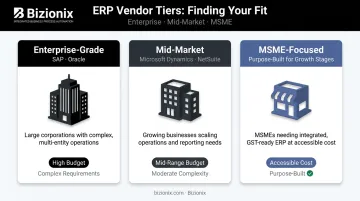
Vendors are responsible for product updates, data security, licensing, and infrastructure. They are generally not responsible for your specific implementation or business process configuration.
Who Is an ERP Consultant?
An ERP consultant — whether an individual or firm — acts as the bridge between the software and your business. They assess your processes, recommend the right ERP, manage the implementation, and train your team.
Key functions a consultant performs:
- Needs analysis and process mapping
- Software configuration and customisation
- Data migration from legacy systems
- Integration with existing tools
- User training and change management
- Post-go-live optimisation and support
Independent consultants and vendor-authorised implementation partners serve different purposes. Vendor partners typically have deeper product knowledge but a narrower perspective — they're incentivised to sell what their vendor offers. Independent consultants tend to provide more objective guidance on platform selection, particularly when you're still evaluating options.
How Vendors and Consultants Work Together
In most mid-sized implementations, both are involved. The vendor provides the platform; the consultant ensures it's configured for your specific workflows and compliance requirements.
Some vendors operate entirely through partner ecosystems of certified consultants. Others, like Bizionix, offer direct implementation support, keeping accountability in one place and reducing handoff delays for MSMEs.
Why Your Choice of ERP Vendor and Consultant Directly Impacts Business Outcomes
ERP projects are high-investment, long-duration initiatives. Panorama Consulting's 2024 ERP Report found a median project cost of $450,000 (roughly ₹3.7 crore) and a median implementation duration of 15.5 months across mid-market organisations — and that's when things go reasonably well.
The downstream consequences of getting it wrong are concrete:
Poor vendor fit creates operational drag:
- Compliance workarounds for GST, e-invoicing, and filings consume staff time
- Data silos persist when modules don't communicate properly
- Manual processes creep back in to compensate for gaps in the software
When vendor gaps exist, even a strong consultant struggles to compensate. And a weak consultant makes those gaps worse.
Poor consultant selection compounds the problem:
- Gartner identifies low end-user adoption and misaligned business needs among the leading causes of ERP failure — both are directly tied to consultant quality
- Panorama found only 33.3% of over-budget organisations had used technology assessment services before implementation
- Businesses with weak change management focus face higher post-go-live abandonment rates
- In India specifically, consultants unfamiliar with GSTN workflows or e-way bill requirements create compliance exposure that surfaces only during audits
The long-term dimension matters too — ERP is not a one-time purchase. The vendor's update cadence, compliance responsiveness to evolving GST regulations, and scalability roadmap will shape your operations for years. A system that fits today but can't handle tomorrow's filing requirements or business volume will cost far more to replace than to get right the first time.
Key Factors to Consider When Choosing an ERP Vendor
Selecting a vendor requires going beyond feature lists and pricing brochures. The criteria below connect vendor capabilities to real operational and compliance outcomes — covering fit, compliance, architecture, scalability, and cost.
Industry and Business-Size Fit
Enterprise ERP platforms impose unnecessary complexity and cost on MSMEs. Look for vendors who explicitly serve businesses at your scale — in your sector.
- A manufacturer running batch production needs different defaults than a service business or hotel
- Time-to-value and user adoption suffer most when the ERP is poorly fitted — teams spend months learning features irrelevant to their work
- Ask vendors how many customers at your revenue size and employee count they actively serve
Compliance Readiness: GST and e-Invoicing
For Indian businesses, this is non-negotiable. The ERP vendor must support:
- GST-compliant accounting and GSTR filings
- Automated e-invoicing with direct IRN generation via the IRP as mandated by CBIC Notification No. 10/2023-Central Tax, which applies the Rs. 5 crore turnover threshold from 1 August 2023
- Multi-company GST management from a single login
Manual GST reconciliation and invoice errors slow your team and create direct penalty exposure. Your ERP should close that risk, not add to it.
Cloud-First Architecture
A cloud-native ERP delivers:
- Real-time access from any location
- Automatic regulatory updates without manual intervention
- No on-premise infrastructure to maintain
- Lower upfront capital expenditure
On-premise alternatives require dedicated IT resources and manual upgrade cycles that most MSMEs cannot sustain.
Only 14% of Indian MSMEs currently use cloud computing services, according to RIS's MSME Digitalisation Report. For growing businesses, choosing a cloud-first vendor means skipping an entire generation of infrastructure overhead.
Scalability and Modular Growth
An MSME today may be a mid-sized enterprise in three years. The vendor's platform must scale without forcing a complete system replacement.
What to look for:
- Modular architecture — start with core modules, add capability as you grow
- Multi-location and multi-company management
- A clear product roadmap showing how the platform evolves
IDC's 2024 Small Business ERP MarketScape calls out modular systems as "configurable building blocks designed for maximum functionality and accelerated time to value" — a design priority that matters most when dedicated IT talent is scarce.
Total Cost of Ownership
ERP pricing extends well beyond the subscription fee. A complete TCO picture includes:
- Implementation and configuration costs
- Data migration fees
- User training
- Customisation charges
- Annual maintenance and support
- Upgrade or module expansion costs
Ask vendors for a detailed TCO breakdown before committing. Panorama's 2024 report identifies unexpected technology costs as the top reason for budget overruns — almost always because buyers didn't ask the right questions upfront.
Key Factors to Consider When Choosing an ERP Consultant
Choosing an ERP consultant is as consequential as choosing the software itself. A poor fit results in a generic implementation that misses how your business actually runs — and fixing that after go-live costs far more than getting it right upfront.
Proven Industry Experience — Not Just Product Knowledge
There's a meaningful difference between a consultant who knows the software and one who knows your industry. Industry-experienced consultants:
- Anticipate workflow-specific challenges before they become project blockers
- Recommend configurations based on sector best practices, not generic defaults
- Understand processes like batch manufacturing, GST-heavy distribution, or multi-outlet hospitality operations
How to verify: Ask for references from businesses in your sector. Probe their answers with process-specific questions. If they only talk features and not operational outcomes, they likely lack domain depth.
Structured Implementation Methodology
A credible consultant follows a documented, phased approach:
- Needs assessment — understand current processes and gaps
- Process mapping — document workflows before configuring the system
- Configuration and customisation — build to your actual requirements
- Data migration — transfer clean, validated data from legacy systems
- Testing — validate the system against real business scenarios
- Training — build genuine user capability, not surface-level familiarity
- Go-live and stabilisation — managed launch with active support
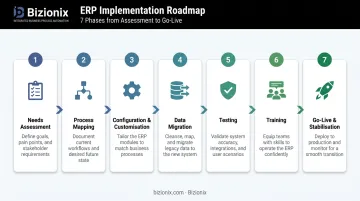
Any proposal to cut data migration or training to reduce costs is a warning sign. These are the two phases most commonly dropped and the two most consistently linked to post-go-live failures.
Post-Implementation Support Commitment
ERP value accumulates over months, not on day one. A quality consultant stays engaged after launch for:
- System optimisation as processes evolve
- Training for new users or new modules
- Troubleshooting issues that only surface during normal operations
Consultants who disengage after go-live leave businesses managing complex systems without guidance — a pattern that frequently ends in underutilisation and eventually abandonment.
Engagement Model and Cost Clarity
Understand the commercial structure before signing:
- Fixed-price contracts provide budget certainty but may limit scope flexibility
- Time-and-materials offers flexibility but requires active monitoring
- Milestone-based aligns payment to delivery, which is often the best structure for MSMEs
Get a written scope of work that specifies what is included and what triggers additional charges. If a consultant cannot clearly explain what success looks like beyond go-live, that is a gap worth addressing before you sign anything.
How Bizionix Supports Indian MSMEs
Bizionix is a cloud-based ERP platform built specifically for Indian MSMEs — designed to deliver enterprise-grade capabilities without the cost or complexity that typically puts such software out of reach for growing businesses.
Unlike global ERP platforms that require heavy customisation to meet Indian compliance requirements, Bizionix is GST-ready from the ground up — with direct API integration with the GST e-Invoice system for instant IRN generation, and automated workflows for e-invoicing, e-Way Bills, and GST filings.
The platform's core capabilities, mapped against the vendor selection criteria above:
- 100% cloud-based with real-time visibility across all business operations — no on-premise infrastructure required
- GST-compliant accounting with automated e-invoicing — IRN and QR code generated instantly via direct IRP connection, with compliant PDFs ready to share within seconds
- Multi-company management from a single secure login — separate books, GST filings, and financials per entity, with consolidated group-level visibility
- Modular and scalable architecture serving manufacturing, distribution, hospitality (via HotelEase), franchise networks, and service-based businesses
- Transparent pricing starting at ₹999/year for the NEO package, with Enterprise plan pricing available for complex operations requiring advanced modules, priority support, and custom configurations
- Direct implementation support through IIS-LLP's teams, with multi-channel post-go-live support including phone, email, live support, and a structured ticketing system
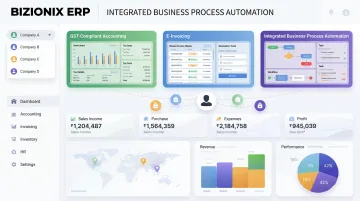
For MSMEs evaluating ERP vendors, this means Indian compliance requirements — GST, e-invoicing, e-Way Bills — are handled by the platform itself, not left to post-implementation workarounds or add-on integrations.
Conclusion
The right ERP vendor and consultant combination is one that fits your industry, your compliance environment — including GST, e-invoicing, and TDS obligations — your budget, and where your business is headed.
The vendor supplies the foundation. The consultant builds on it. Both relationships deserve equal scrutiny, and both should be evaluated as long-term partnerships rather than transactional engagements.
ERP adoption is not a one-time event. Revisit your vendor relationship and system utilisation annually. As your business scales — adding entities, locations, or regulatory obligations — your requirements will shift, and your platform needs to keep pace.
Frequently Asked Questions
Who are the main ERP vendors?
Major global ERP vendors include SAP, Oracle, Microsoft Dynamics, NetSuite, and Infor — primarily suited to large or mid-market enterprises. In the Indian MSME market, purpose-built platforms like Bizionix offer more accessible, compliance-ready alternatives without enterprise-grade complexity or cost.
Who is an ERP consultant?
An ERP consultant is a domain expert who helps businesses select, implement, configure, and optimise an ERP system. They bridge the gap between the software's capabilities and the business's specific operational needs, covering everything from needs assessment through post-go-live support.
What is the difference between an ERP vendor and an ERP consultant?
A vendor builds and sells the ERP software; a consultant helps deploy and customise it for a specific business. In some cases, a vendor also offers direct implementation services (Bizionix does this through IIS-LLP), but these remain functionally distinct roles with different areas of accountability.
When should a business hire an ERP consultant?
Engage a consultant when the ERP requires significant configuration, integration with existing tools, or data migration from legacy systems, especially when the internal team lacks prior implementation experience. The more complex the business processes, the more critical independent consulting becomes.
How long does ERP implementation typically take?
Small to mid-sized businesses typically see timelines of 3 to 6 months for a phased rollout. Panorama's 2024 report found a median of 15.5 months across mid-market organisations, though that sample reflects larger and more complex deployments. Inadequate planning or weak consultant selection can stretch any timeline well beyond initial estimates.
What should MSMEs in India look for when choosing an ERP vendor?
Prioritise GST compliance, automated e-invoicing with IRN generation, cloud deployment, affordability, scalability, and local support. Platforms designed specifically for Indian MSMEs reduce the customisation burden and compliance risk that comes with adapting global enterprise systems to Indian regulatory requirements.