For Indian MSMEs, the stakes are higher than they might be for a large enterprise. Technology budgets are tight, internal IT teams are small, and the margin for a six-month delay or a cost overrun is razor-thin. The 2024 ERP Report by Panorama Consulting Group found that 49% of ERP projects exceeded planned budgets and 42% ran past their scheduled timelines — figures that should give any MSME pause before signing a partner agreement.
This guide walks through what to look for, what to avoid, and how to evaluate ERP implementation partners before you commit.
Key Takeaways
- Your ERP partner doesn't just install software — they own the entire rollout, from data migration and configuration to training and post-go-live support
- Five qualities separate strong partners from weak ones: industry expertise, platform depth, a structured methodology, change management support, and long-term commitment
- Four red flags: vague methodology, no verifiable references, promises that sound too good, and no post-go-live support plan
- For Indian MSMEs: add GST compliance knowledge and MSME-specific workflow familiarity as non-negotiable criteria
What Is an ERP Implementation Partner?
An ERP implementation partner is a specialist consultant or firm that manages the end-to-end deployment of your ERP system. Their scope typically covers:
- Needs assessment and process mapping
- System configuration and customisation
- Data migration from legacy tools
- Integration with existing software
- User training and change management
- Post-launch stabilisation and support
This is distinct from an ERP vendor. The vendor builds and licenses the software. The implementation partner makes it work inside your actual business. Some vendors offer in-house professional services teams (Oracle Consulting, for example). Others work through certified third-party partners, as SAP and Microsoft do.
Three Types of Implementation Partners
| Type | What They Do |
|---|---|
| System integrators | Handle technical configuration, data migration, integration design, and go-live cutover |
| Vendor professional services | In-house teams offered by the ERP vendor itself; accountable to both the project and the product |
| Independent oversight partners | Provide governance and quality assurance without doing the hands-on technical work — useful when you need neutral accountability |
For most Indian MSMEs, a system integrator with sector-specific experience and working knowledge of GST, TDS, and local compliance requirements is the right starting point.
Key Qualities to Look for in an ERP Implementation Partner
Not all implementation partners are equal. The right one brings domain knowledge, a structured process, and a genuine stake in your long-term success — not just hitting a go-live date.
Industry and Domain Expertise
A partner who understands your sector can map ERP workflows to how your business actually operates — not apply a generic template and hope it fits. A manufacturing company has fundamentally different inventory, production, and costing requirements than a hospitality business or a multi-location distributor.
Generic configurations create gaps that surface after launch. Fixing them post-go-live costs significantly more than getting it right the first time.
For Indian MSMEs specifically, industry expertise must include:
- Familiarity with GST e-invoicing requirements (mandatory for businesses with aggregate turnover above ₹5 crore)
- TDS compliance under Section 194Q for eligible buyers
- Sector-specific reporting formats and workflows common in Indian operations
These aren't edge cases — they're core to how your ERP will be used daily.
Platform Knowledge and Technical Certifications
A certified partner with hands-on experience on your specific ERP platform can optimise configurations, avoid costly mistakes, and resolve issues faster. Someone learning the platform on your project introduces avoidable risk.
Ask to see:
- Vendor-recognised certifications or partnership tier (SAP, Microsoft, Oracle, Zoho, Tally all publish these publicly)
- A track record with the specific platform — not just "we implement ERP"
- Named team members and their individual credentials
Microsoft's Solutions Partner for Business Applications designation, for instance, requires partners to demonstrate at least 70 points across capability and performance criteria. These tiers exist precisely so buyers can verify competence before signing anything.
Structured Implementation Methodology
A credible partner can describe their methodology in specific terms: defined phases, named deliverables at each stage, clear milestones, and documented success criteria. What this looks like in practice:
- Discovery — understanding your current processes, integration needs, and data landscape
- Configuration — building the system to your requirements
- Data migration — cleaning, mapping, and importing your existing data
- Testing — user acceptance testing with your actual business scenarios
- Training — role-based sessions before go-live
- Go-live and hypercare — controlled cutover with active support in the first weeks
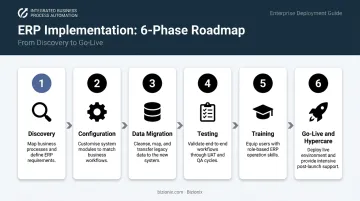
If a partner cannot walk you through these phases and show examples of how they've executed them for similar businesses, that's a problem. Major platforms like SAP (Activate), Microsoft (Success by Design), Oracle (Unified Method), and NetSuite all publish structured frameworks. A quality partner's process should reflect that same level of discipline.
Change Management and User Training Support
This is where most implementations quietly fall apart. Prosci's research found that excellent change management is approximately 6x more likely to result in a project meeting its objectives than poor change management. Yet Panorama's data shows that smaller organisations are far more likely to underinvest in this area.
What adequate training support looks like:
- Role-based training sessions tailored to actual user responsibilities
- Sandbox or practice environments before go-live
- Clear documentation that users can reference independently
- An onboarding plan that accounts for different technical literacy levels across departments
If the partner's proposal mentions "training" as a single line item without any further detail, push harder.
Post-Go-Live Support and Long-Term Commitment
Go-live is not the finish line. The first four to eight weeks after launch are typically the most unstable period: users are adapting, edge cases surface, and configuration gaps become visible. A partner who disappears after cutover can undo months of careful preparation.
A committed partner will offer:
- A defined hypercare period with explicit SLAs and named support contacts
- A clear handover process from implementation to ongoing support
- Willingness to assist with module additions, compliance updates, and configuration changes as your business grows
The right partner treats this as a long-term relationship, not a closed project.
Red Flags That Signal the Wrong ERP Implementation Partner
These warning signs often appear during the sales or proposal stage — before you've signed anything.
Vague or Absent Implementation Methodology
If a partner cannot describe their process in specific, written terms — phases, deliverables, RACI responsibilities, escalation paths — that ambiguity will carry through every phase of the project. Ask for a written methodology document. If one doesn't exist, that's your answer.
No Verifiable References or Relevant Case Studies
A polished pitch deck is not evidence of results. Partners who cannot provide references from businesses similar to yours in size, sector, or implementation complexity are an unknown risk. When you do speak to references, ask specific questions:
- Was the go-live on time and within budget?
- What problems arose, and how were they resolved?
- What would you do differently?
Promises That Sound Too Good to Be True
Watch for these specific warning signs during the sales conversation:
- Suspiciously low pricing that doesn't account for data migration, training, or integration work
- Unusually short timelines that don't reflect your actual system complexity
- Dismissal of your requirements as simple or standard without a proper scoping exercise
Panorama Consulting's research shows 42% of ERP projects exceed their planned timelines — often because resource constraints and hidden integration work weren't scoped upfront. Ask any shortlisted partner to show you a comparable project timeline from a similar client.
No Clear Post-Implementation Support Plan
A contract that ends at go-live isn't enough for a growing MSME. Your system requirements will evolve — GST rule changes, e-invoicing mandate updates, new modules as you scale. Before signing, confirm what post-launch support looks like in writing: response times, scope of coverage, and escalation paths. Vagueness here isn't a negotiation point — it's a gap in how they operate.
How to Evaluate ERP Implementation Partners Before You Commit
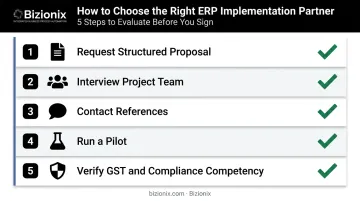
Most ERP partner mistakes happen before the contract is signed. This process helps you separate genuine capability from polished sales pitches:
Request a structured proposal — it should include phased delivery, named team members, integration scope assumptions, and timeline with milestones. Vague proposals produce vague implementations.
Interview the actual project team — not just the sales representative. Ask how they handle scope changes, what they do when data migration fails midway, and how they've resolved disputes with previous clients.
Contact at least two or three references — ideally from your sector. Ask about specific challenges, not just whether they'd recommend the partner.
For larger projects, run a pilot — a small, scoped proof-of-concept engagement reveals how a partner actually works: their communication cadence, responsiveness, and problem-solving approach.
For Indian MSMEs specifically — verify that the partner can demonstrate, not just claim, competency in GST e-invoicing, TDS configuration under Section 194Q, and GSTR-1 auto-population. Ask for a live demo of these workflows — a GST invoice is only valid with a confirmed IRN, and misconfiguration here creates direct compliance risk.
How Bizionix Makes ERP Implementation Simpler for Indian MSMEs
Bizionix is a cloud ERP built specifically for Indian MSMEs, developed by IIS-LLP, a subsidiary of Protocol India Private Limited with over two decades of industry experience. The platform is built around the specific constraints of growing Indian businesses — GST obligations, limited IT resources, multi-entity structures — not adapted from enterprise software designed for multinationals.
A few things that directly reduce implementation complexity:
- 100% cloud-based — no server procurement, no IT infrastructure setup, no lengthy hardware lead times. The platform is accessible immediately through any browser.
- GST-ready from day one — direct API integration with the government's Invoice Registration Portal means IRN and QR code generation is automatic upon invoice creation. GSTR-1 is auto-populated from sales transactions, and the system validates invoice data before submission to prevent rejections.
- Configurable to existing workflows — the system adapts to how your business already operates, including custom workflow design to match your SOPs, rather than requiring you to restructure operations around the software.
- Unified across functions — Finance, Inventory, CRM, HRMS, Warehouse, and Production Planning sit in a single platform. This eliminates the integration complexity that comes with stitching together five or six separate tools.
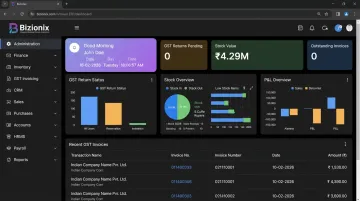
Before committing, businesses can test these modules directly through Bizionix's 14-day free trial on the NEO plan — hands-on access to core functionality with no upfront cost.
Businesses looking for an ERP built for Indian MSME compliance requirements and operational workflows can reach Bizionix at info@bizionix.com or +91 91779 99277 to discuss their requirements.
Conclusion
Choosing an ERP implementation partner deserves the same rigour as choosing the ERP software itself — in many cases, more. The partner determines whether the software ever delivers on its promise.
The qualities that matter most — domain expertise, a structured methodology, genuine change management support, and post-go-live commitment — signal a partner invested in your long-term success, not just a clean launch. The red flags are equally telling: vague processes, unverifiable references, and contracts that end at go-live.
Before you sign, run through the basics:
- Verify references from businesses in your industry
- Ask direct questions about methodology, timelines, and post-go-live support
- Confirm the contract covers training, data migration, and hypercare — not just deployment
A partner who understands your operations, not just the software, is the one worth choosing.
Frequently Asked Questions
What does an ERP implementation partner do?
An ERP implementation partner manages the end-to-end deployment of your ERP system — covering needs assessment, configuration, data migration, user training, and post-go-live support. Their role is to translate the software's capabilities into working solutions for your specific business processes.
How do I choose an ERP implementation partner?
Evaluate partners on industry experience, platform certifications, a documented implementation methodology, verifiable client references, and a clear post-go-live support plan. For Indian MSMEs, add GST and TDS compliance competency as a non-negotiable criterion.
What is the difference between an ERP vendor and an ERP implementation partner?
The ERP vendor builds and licenses the software. The implementation partner provides the services to configure, deploy, and embed that software into your business. Some vendors offer their own implementation teams; others work through certified third-party partners.
Can an MSME implement ERP without an external partner?
Most MSMEs benefit from partner support even for simpler rollouts. ERP projects require specialised skills in data migration, compliance configuration, and change management that internal teams rarely have — and the cost of a failed implementation typically exceeds the partner's fee.
What are the most common reasons ERP implementations fail?
Poor partner selection, inadequate change management, unrealistic timelines, insufficient user training, and lack of executive sponsorship are the leading causes. Most failures trace back to implementation decisions, not the software itself.
How long does ERP implementation typically take for a small business?
For most small businesses, a focused implementation runs between 4 and 16 weeks depending on module count and data complexity. Cloud-based solutions like Bizionix compress that timeline further, since there is no infrastructure to set up before go-live.