Introduction
Setting the right room price at the right time, across OTAs, direct bookings, and corporate channels, is one of the most operationally demanding challenges hotel operators face. For mid-sized and independent hotels without a dedicated revenue manager, the problem compounds: pricing decisions often rely on gut feel, spreadsheets, or simply copying competitor rates.
Revenue Management Software (RMS) changes that equation. By combining AI-driven demand forecasting, real-time competitor tracking, and automated pricing rules, modern RMS platforms remove the guesswork from one of hospitality's highest-leverage decisions.
The market opportunity is significant. According to Global Market Insights (August 2025), the global hospitality revenue management and pricing analytics market was valued at USD 4.1 billion in 2024 and is projected to reach USD 13.1 billion by 2034 — a 12.6% CAGR. Hotels of every size — from boutique independents to multi-property groups — are driving that adoption, and the platforms competing for their business have matured considerably.
What follows is a practical breakdown of the five best hotel RMS platforms for 2026: the features that differentiate them, the property types they suit best, and how to pick the right fit for your operation.
Key Takeaways
- RMS software automates pricing using real-time demand, competitor rates, and booking pace data
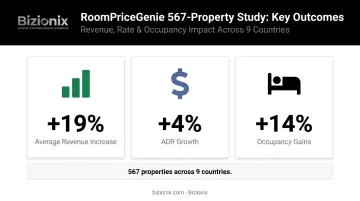
- Properties using RMS tools see measurable results: a 567-hotel study by RoomPriceGenie reported an average revenue increase of 19%
- Must-have features: dynamic pricing engine, PMS/channel manager integration, demand forecasting, competitor rate tracking, and analytics dashboards
- Top systems for 2026: IDeaS, Cloudbeds Revenue Intelligence, RoomPriceGenie, Duetto, and BEONx
- The right RMS depends on your property size, integration requirements, and how much automation your team needs
What Is Hotel Revenue Management Software?
Hotel RMS is software that analyzes occupancy trends, booking pace, competitor pricing, and live market demand to recommend or automatically apply optimal room rates. It replaces spreadsheet-based pricing and reactive rate adjustments with continuous, data-driven decisions.
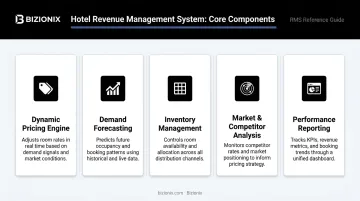
Five Core Components Every RMS Includes
| Component | What It Does |
|---|---|
| Dynamic Pricing Engine | Adjusts rates automatically based on occupancy, day of week, lead time, and demand signals |
| Demand Forecasting | Predicts future booking patterns using historical data and live market inputs |
| Inventory Management | Controls room availability, minimum stay restrictions, and channel allocation |
| Market & Competitor Analysis | Tracks compset rates and market positioning in real time |
| Performance Reporting | Monitors KPIs including RevPAR, ADR, occupancy, and booking pace |
The Indian Hospitality Context
HVS ANAROCK data (2025) shows nationwide RevPAR closed 2024 at INR 5,000–5,200, running 27–29% above pre-COVID benchmarks. JLL India reported 11.4% year-on-year RevPAR growth in Q1 2024, with over 75% of new hotel openings in Tier II and Tier III cities.
As mid-sized Indian hotels scale, effective revenue management depends on two technology layers working together: an RMS for pricing intelligence, and an operational platform handling GST-compliant billing, multi-entity financial control, and unified hotel operations. Bizionix's HotelEase addresses this second layer, giving Indian hotel operators the structured operational backbone that an RMS requires to function effectively.
Best Hotel Revenue Management Software Systems for 2026
These five platforms were selected based on AI capability, ease of use, integration depth, demonstrated outcomes, and suitability across different property sizes.
IDeaS (SAS)
IDeaS is one of the longest-standing RMS platforms globally, trusted by 31,000+ properties worldwide. It is purpose-built for large hotel chains and enterprise groups that need sophisticated automated pricing at scale.
The platform's machine learning algorithms automate rate decisions across multiple room types and market segments simultaneously. The Olympia Companies achieved 10% ADR growth in the year after implementing IDeaS G3 RMS, while Stoney Creek Hospitality reported a 10–15% ADR increase using the same system.
| Criteria | Details |
|---|---|
| Best For | Large hotel chains, enterprise hotel groups, properties with complex market segmentation |
| Key Features | Automated AI pricing, multi-segment rate optimisation, demand forecasting, centralised portfolio management |
| Accessibility | Enterprise-tier pricing; requires trained revenue management staff for full utilisation |
Cloudbeds Revenue Intelligence
Cloudbeds Revenue Intelligence is a native RMS built directly into the Cloudbeds platform, making it a strong fit for independent hotels and growing property groups that want pricing intelligence without managing a separate system.
Its causal AI engine forecasts demand up to 90 days out. Cloudbeds' own published data confirms the platform can forecast occupancy with up to 95% accuracy over a six-month window — eliminating the data silos that arise when a standalone RMS needs to pull data from a separate PMS and channel manager.
| Criteria | Details |
|---|---|
| Best For | Independent hotels, mid-size properties, multi-property groups using Cloudbeds PMS |
| Key Features | Causal AI forecasting, automated dynamic pricing, real-time market and competitor data, revenue marketing integration |
| Accessibility | Native to Cloudbeds platform; no separate integration required; pricing available on request |
RoomPriceGenie
RoomPriceGenie is purpose-built for independent hoteliers and small-to-medium properties that want automated pricing without needing a dedicated revenue manager. It is one of the most accessible entry points into RMS for first-time adopters.
Key differentiators include fast setup, an intuitive interface that non-specialist hotel staff can operate confidently, and an Autopilot mode that handles rate adjustments fully automatically. Transparent pricing rationale is shown alongside every recommendation, so operators understand why rates are changing. A 14-day free trial lowers the barrier for hotels evaluating the platform.
RoomPriceGenie's 2025 study across 567 properties in 9 countries reported average revenue increases of 19%, ADR growth of 4%, and occupancy gains of 14%.
| Criteria | Details |
|---|---|
| Best For | Small and independent hotels, B&Bs, boutique properties, first-time RMS users |
| Key Features | Automated dynamic pricing, rate calendar, surge protection, minimum stay restrictions, reporting dashboards |
| Accessibility | Property-size-based quoting model; 14-day free trial available; multilingual support |
Duetto
Duetto is a cloud-based enterprise RMS built around its proprietary Open Pricing model — an approach that lets hotels set rates independently across room types, segments, and channels rather than anchoring everything to a fixed Best Available Rate.
This removes the traditional BAR constraints that limit revenue potential. As Duetto's own documentation explains, Open Pricing allows "each segment, channel, and room type to price independently based on live demand signals". NH Hotel Group, operating 400 hotels, achieved an 8.5% RevPAR increase after adopting Duetto. Today, 7,500+ properties across 100+ countries use the platform.
| Criteria | Details |
|---|---|
| Best For | Luxury hotels, boutique collections, enterprise hotel groups, properties with complex distribution strategies |
| Key Features | Open Pricing model, real-time demand forecasting, room type and channel-level pricing, group pricing tools |
| Accessibility | Enterprise pricing; best suited for properties with in-house revenue management expertise |
BEONx
BEONx takes a holistic approach to revenue management, shifting the focus from RevPAR (Revenue per Available Room) to RevPAG (Revenue per Available Guest) — accounting for the full value a guest generates across rooms, F&B, spa, and events.
BEONx's AI-driven forecasting incorporates these broader revenue streams directly into pricing decisions — not as a post-calculation adjustment, but as a live input. Its strategic budgeting tools then connect those revenue projections to financial planning, giving full-service hotels and resorts a single model for both operational and long-term decisions. The platform's reach is reflected in its recognition: The Leading Hotels of the World — comprising more than 400 hotels across 80 countries — selected BEONx as one of its top global preferred RMS vendors in 2022.
| Criteria | Details |
|---|---|
| Best For | Full-service hotels and resorts, properties with strong ancillary revenue streams |
| Key Features | Total profitability (RevPAG) model, AI demand forecasting, budgeting tools, channel optimisation, sustainability-focused positioning |
| Accessibility | Mid-to-enterprise tier; pricing available on request; implementation support provided |
Must-Have Features in Hotel Revenue Management Software
Not all RMS platforms are equal, and the right one must match your property's size, team structure, and existing tech stack.
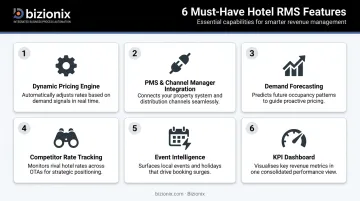
Six Features That Matter Most
- Dynamic pricing engine — Handles occupancy-based rules, day-of-week patterns, lead time adjustments, and event-based spikes automatically
- PMS and channel manager integration — Real-time data sync ensures pricing decisions are based on live availability, not delayed feeds
- Demand forecasting — Combines historical data with live market signals to project future booking patterns accurately
- Competitor rate tracking — Monitors compset pricing in real time and triggers alerts when market positioning shifts
- Event intelligence — Identifies local demand spikes from concerts, conferences, and holidays before they affect booking pace
- KPI dashboard — Surfaces RevPAR, ADR, occupancy, and booking pace in one view without requiring manual report builds
Non-Negotiables: Cloud Architecture and Support
Cloud-based deployment and 24/7 vendor support are not optional. During peak demand periods, a pricing error or system outage means rooms sell at the wrong rate — or don't sell at all. These aren't infrastructure preferences; they're operational requirements.
Integration Depth Matters
An RMS operating in isolation delivers a fraction of its potential value. The real gains come when pricing intelligence connects to clean, real-time operational data — and that requires a reliable system of record underneath it.
For Indian hotels managing GST invoicing, multi-entity billing, and financial compliance across multiple revenue streams, Bizionix HotelEase handles the operational layer: GST-compliant billing, real-time RevPAR and ADR tracking, and multi-property financial management. That gives an RMS accurate, structured data to work with rather than patchy inputs from disconnected tools.
How We Chose the Best Hotel Revenue Management Systems
Each platform in this list was assessed across six criteria:
- AI and automation: Does the forecasting engine adapt to demand shifts, and how much of the pricing process runs automatically?
- PMS integration depth: Clean, low-friction connectivity with existing property management infrastructure
- Ease of use: Can non-specialist hotel staff operate it without dedicated revenue management training?
- Scalability — fit across independent properties, mid-size hotels, and enterprise groups
- Customer evidence: Documented RevPAR outcomes, industry recognition, and verified user reviews
- Demonstrated impact: Verifiable client results — not just feature marketing
The Most Common Mistake When Choosing an RMS
Operators frequently prioritise brand name or upfront cost over fit. A system built for 500-room chains will overwhelm a 40-room boutique property; a tool designed for tiny independents won't scale across a hotel group. The same principle applies whether you're running a heritage property in Rajasthan or a business hotel in a metro city — match software complexity to your team's actual capacity to use it.
Conclusion
Choosing the right RMS is one of the most impactful technology decisions a hotel can make. The difference between reactive pricing and a system that adjusts rates in real time based on live demand, competitor shifts, and booking pace can deliver measurable RevPAR gains across peak and off-peak periods.
Evaluate platforms based on long-term scalability, integration compatibility with your current tech stack, and the level of automation that your team can actually act on — rather than initial pricing or feature checklists alone.
For hotel operators in India looking to build a stronger operational foundation alongside their revenue management strategy, Bizionix offers a unified ERP and hotel management platform built specifically for Indian hospitality businesses — covering GST-compliant billing, multi-entity financial management, real-time revenue intelligence, and complete operational visibility. Explore Bizionix HotelEase or reach out to the team at +91 91779 99277 to see how it fits your property.
Frequently Asked Questions
What is a revenue management system for hotels?
A hotel RMS is software that analyses demand patterns, competitor pricing, and booking pace to automatically recommend or apply optimal room rates. The result is continuous, data-driven pricing that replaces manual rate adjustments and reduces revenue lost to guesswork.
What ERP do hotels use?
Hotels use ERP platforms to manage back-office functions including accounting, GST compliance, multi-entity financial control, and operational reporting. In India, platforms like Bizionix are built specifically for hospitality businesses in the MSME segment, integrating hotel operations management with GST-compliant accounting, e-invoicing, and financial reporting under one platform.
What is the difference between a PMS and an RMS?
A Property Management System (PMS) handles day-to-day hotel operations — reservations, check-in/check-out, housekeeping, and billing. An RMS focuses specifically on pricing strategy and revenue optimisation. The two systems ideally integrate so that pricing decisions are based on live operational data.
How much does hotel revenue management software cost?
RMS pricing ranges from monthly subscriptions for independent hotels to enterprise contracts for large chains — most vendors quote based on room count rather than publishing fixed prices. When comparing options, account for setup costs, training, and integration fees beyond the base subscription.
Can small or independent hotels benefit from an RMS?
Yes. Platforms like RoomPriceGenie are designed specifically for smaller properties without dedicated revenue managers, offering automated pricing with minimal configuration. The 567-property study cited earlier shows that independent hotels consistently achieve meaningful revenue and occupancy gains within months of adoption.
What key metrics does hotel revenue management software track?
Core KPIs tracked by hotel RMS platforms include:
- RevPAR — Revenue per Available Room; the primary measure of overall pricing performance
- ADR — Average Daily Rate; tracks the average revenue earned per occupied room
- Occupancy rate — percentage of available rooms sold in a given period
- Booking pace — how quickly reservations are filling relative to historical patterns
- TRevPAR — Total Revenue per Available Room, including non-room revenue streams
Together, these metrics help operators spot underperformance early and benchmark against their competitive set.