Introduction
Growing businesses in India face a familiar operational nightmare: financial data scattered across Excel sheets, inventory tracked on WhatsApp, sales orders managed in one tool, and accounting handled in another. This fragmentation creates delays, data mismatches, and decisions based on outdated information. According to a report by the Research and Information System for Developing Countries, 94% of business spreadsheets contain errors, yet many MSMEs continue relying on these manual systems because accessible, affordable alternatives aren't always obvious.
Many businesses turn to custom ERP development as a solution: a system built precisely for their workflows. But this decision carries real trade-offs in cost, time, and complexity that vendors rarely discuss upfront. Fully custom builds can take 12–24 months and require significant investment, while off-the-shelf solutions force businesses to adapt their processes to rigid software templates.
This guide breaks down what custom ERP development actually involves, how the process works, and what it costs. Most importantly, it helps you decide whether building from scratch, buying off-the-shelf, or choosing a configurable platform built for your market is the right call.
Key Takeaways
- Custom ERP is built from scratch to match exact workflows, unlike packaged solutions that require process adaptation
- Typical development follows six phases over 6–24 months: requirements, design, build, testing, deployment, and support
- Implementation services typically run 100–200% of annual software fees, with customization adding another 10–15%
- Key benefits include unified operations, real-time visibility, and scalability without system replacement
- For most Indian MSMEs, configurable platforms like Bizionix offer the same core advantages — faster to deploy, lower upfront cost, and built for local compliance
What Is Custom ERP Development?
Custom ERP development is the process of building an enterprise resource planning system from the ground up, designed to match a business's unique workflows, industry requirements, and operational logic — so the software fits the business, not the other way around.
How It Differs from Off-the-Shelf ERP
Off-the-shelf ERP systems like SAP or Oracle require businesses to adjust their processes to fit the software's structure. If your manufacturing company needs production-specific workflows combined with GST-compliant invoicing, a generic solution often forces workarounds or manual steps. Custom ERP eliminates these compromises by building exactly what you need.
What "Built from Scratch" Actually Means
In practice, custom development involves:
- A database architecture tailored to your specific data relationships
- A user interface built around your team's actual workflows
- Module logic that mirrors your operational processes
- Integrations built around your existing tools and data systems
Who Benefits Most from Custom ERP
Custom ERP typically serves enterprises with highly specialized workflows, regulated industries with strict compliance requirements, or large organizations with multi-entity operations that generic platforms can't handle. A pharmaceutical manufacturer with unique batch tracking requirements or a multi-state logistics company with complex regulatory reporting are typical examples.
That said, not every business that feels constrained by generic software needs a fully custom-built system.
The MSME Reality
For many growing Indian MSMEs, the real need is flexibility, GST compliance, unified operations, and real-time visibility — not a ground-up build. These needs can often be met through configurable platforms built specifically for their segment, delivering operational fit without the full development cost or multi-year timeline.
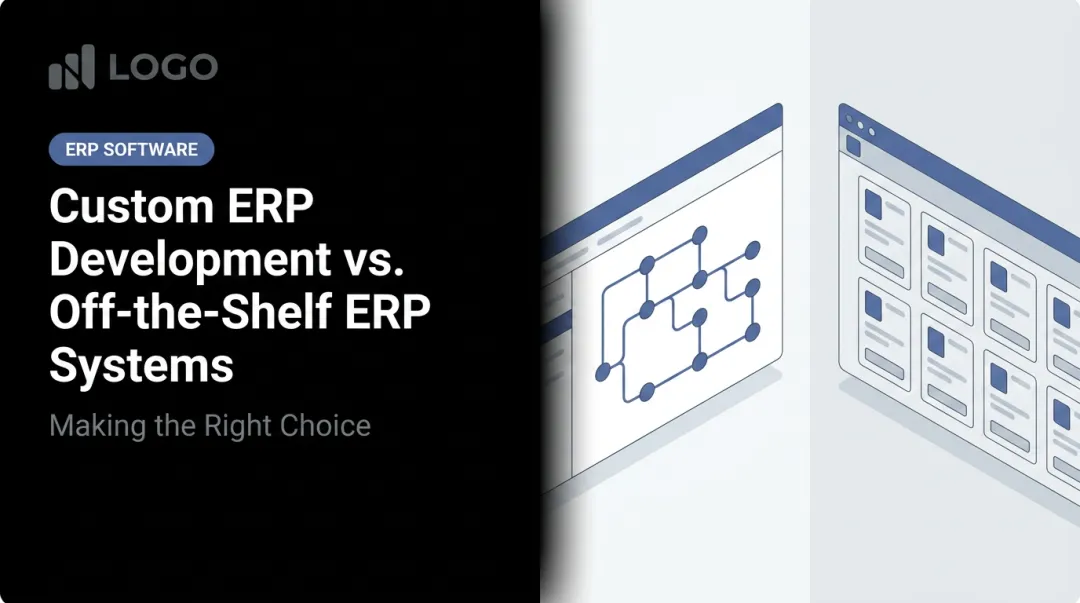
Custom ERP vs. Off-the-Shelf vs. Configurable ERP: Which Is Right for You?
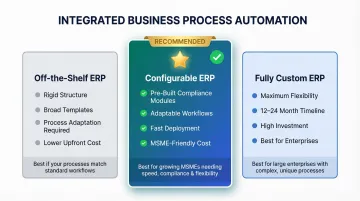
Most articles compare only custom-built versus off-the-shelf ERP, leaving buyers without the full picture. The reality is a three-way decision framework that includes a middle path: configurable ERP platforms.
Off-the-Shelf ERP
Mass-market platforms designed for broad appeal with rigid module structures and expensive licenses. These systems often require businesses to adjust their processes to fit the software, creating workarounds that defeat the purpose. Implementation demands steep learning curves, and customization—when possible—is costly and complicated.
Fully Custom ERP
Maximum flexibility with software built exactly to your specifications. However, this approach demands significant upfront investment, 12–24+ month development timelines, skilled development teams or vendors, and ongoing maintenance costs. 68% of ERP implementations fail to meet their objectives, with average budget overruns hitting 189%.
Configurable ERP
Purpose-built platforms for specific business types or markets that come pre-built with relevant modules, compliance features, and adaptable workflows. These offer the operational fit of custom ERP without the full development cost or timeline.
Example: Bizionix is a cloud ERP built specifically for Indian MSMEs with GST-ready accounting, multi-company management, and configurable workflows. It delivers full accounting, compliance, and workflow capabilities at MSME-appropriate cost—deployable in days or weeks, not months or years.
Decision Guide:
- Choose fully custom ERP if your processes are genuinely unlike anything on the market and you have the budget and timeline for multi-year development
- Choose a configurable platform if you need flexibility, compliance, and unified operations within a realistic timeline and budget
- Choose off-the-shelf if your processes align closely with standard templates and industry-specific compliance isn't a factor
The Custom ERP Development Process: Step by Step
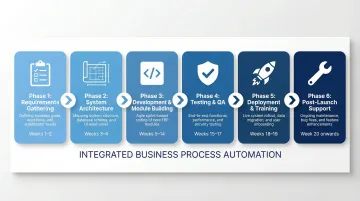
Custom ERP development follows a structured, multi-phase process — not a single deployment event. Timelines range from several months for basic systems to over a year for complex implementations.
Requirements Gathering and Planning
This foundational phase involves mapping existing workflows, identifying bottlenecks, gathering requirements from all department stakeholders, and translating operational needs into a technical specification document.
Skipping or rushing this phase is the most common reason custom ERP projects fail or go over budget. 42% of ERP failures are due to inadequate change management, which starts with incomplete requirements.
System Architecture and Design
This phase covers the structural decisions that shape everything downstream:
- Database design and module structure
- UI/UX prototyping for key workflows
- Integration planning with accounting software, GST portals, and inventory systems
Poor architecture choices create technical debt that makes future changes expensive and slow — so this phase deserves as much time as development itself.
Development and Module Building
Development happens iteratively, building modules one at a time — starting with core functions like finance and inventory. Regular sprint reviews with stakeholders keep the build aligned with the original specification, catching mismatches before they become expensive rework.
Testing and Quality Assurance
Comprehensive testing includes:
- Functional testing per module
- Integration testing across modules
- Performance testing under load
- Security testing
- User acceptance testing (UAT) with real end-users before go-live
Deployment, Training, and Post-Launch Support
This phase includes data migration from legacy systems, phased or full rollout, and end-user training across departments. Post-launch support — covering bug fixes, module updates, and feature additions as the business grows — typically runs 15–20% of the initial development cost annually. Budget for it from day one.
Key Modules Every Custom ERP System Should Include
Not every ERP needs the same set of modules — but certain functions are foundational for almost any growing business. Here's what most custom ERP builds cover.
Core Operational Modules
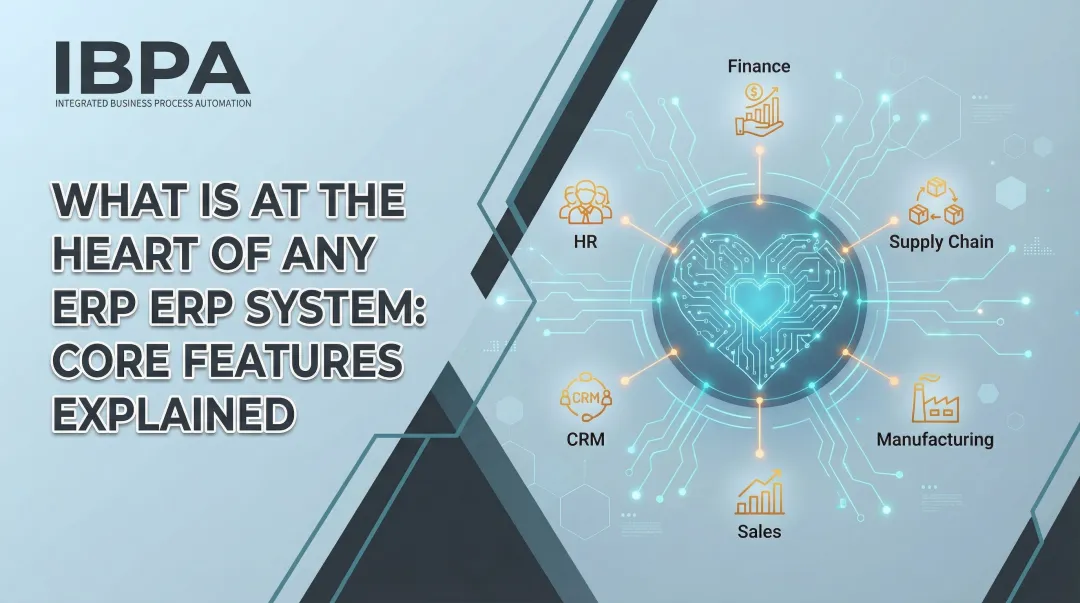
Financial Management:
- General ledger
- Accounts payable/receivable
- GST-compliant invoicing
- Bank reconciliation
- Financial reporting (P&L, balance sheets)
Inventory and Supply Chain Management:
- Real-time stock tracking
- Procurement workflows
- Reorder automation
- Multi-location inventory control
HR and Payroll:
- Employee records
- Attendance tracking
- Payroll processing
- Statutory compliance
CRM:
- Sales pipeline management
- Customer records
- Service ticketing
- Lead tracking
Reporting and Analytics
This is a non-negotiable module. Role-based dashboards, real-time KPI visibility, and customizable reports allow decision-makers to act on data rather than assumptions. Organizations using unified ERP data models improve decision-making by 40%.
Module selection should be driven by business need, not feature lists. Overburdening an ERP with unused modules increases cost, complicates training, and slows adoption. Start with the modules that address your highest-friction operational problems — then expand from there.
Core Benefits of Custom ERP for Growing Businesses
Operational Efficiency and Process Unification
Running all business functions through a single connected system eliminates duplicate data entry, manual follow-ups, and inter-department miscommunication. When sales, inventory, and finance teams share the same real-time data, processes move faster and errors drop significantly.
Common efficiency gains include:
- Fewer handoff delays between departments
- No reconciliation gaps between disconnected tools
- Faster approvals with automated workflow routing
- Consistent data across finance, operations, and customer records
Scalability That Matches Business Growth
Unlike rigid off-the-shelf platforms, a configurable ERP expands with the business—adding new modules, users, locations, or entities without requiring full system replacement. This eliminates the costly "rip and replace" cycle that holds back businesses outgrowing their initial software.
Better Decision-Making Through Real-Time Data Visibility
When financial, inventory, sales, and HR data all live in one system, leadership can access accurate, up-to-date information across the business without waiting on reports from individual departments. According to an IDC FutureScape study cited by Cognitus, AI-infused ERP processes drive 45% improvements in operational efficiency and employee productivity globally — a benchmark that reflects the broader shift toward unified, data-driven business management.
How Much Does Custom ERP Development Cost?
Key Cost Factors
Pricing depends on:
- Number of modules required
- Complexity of integrations with existing systems
- Size of the user base
- Level of customization needed
- Whether you hire an in-house team or engage an external vendor
General Cost Ranges
While authoritative INR ranges for ground-up custom builds vary widely, industry data shows that implementation services typically cost 100–200% of annual software fees. Typical ground-up build costs in India fall roughly within these bands:
| ERP Type | Best For | Estimated Cost |
|---|---|---|
| Basic ERP | Smaller businesses, core modules only | ₹5–15 lakhs |
| Mid-range ERP | Growing businesses with multiple integrations | ₹15–50 lakhs |
| Enterprise-grade ERP | Advanced analytics, multi-entity support | ₹50 lakhs–₹2 crores+ |
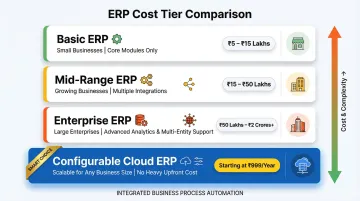
These ranges exclude ongoing maintenance, which typically adds 15–20% of the initial cost annually.
What You Get for That Investment
That cost pays off through:
- Reduced manual labor
- Elimination of multiple software subscriptions
- Fewer operational errors
- Faster billing and collection cycles
For MSMEs that don't need a fully bespoke build, configurable cloud platforms can close most of that gap at a fraction of the cost. Bizionix, for instance, starts at ₹999/year for the Basic plan — built specifically for Indian MSMEs who need real ERP functionality without the price tag of a custom development project.
Frequently Asked Questions
What is a custom ERP system?
A custom ERP system is enterprise software built specifically for a business's workflows, data structures, and operational needs—as opposed to off-the-shelf solutions that require businesses to adapt their processes to pre-built software.
Can ERP be customized?
Yes. You can either build a system from scratch (fully custom development) or choose a configurable ERP platform that allows workflow, module, and integration adjustments without redevelopment. For most MSMEs, the configurable route is more practical and cost-effective.
How much does a custom ERP system cost?
Costs vary widely based on complexity, modules, integrations, and team structure—ranging from ₹5–15 lakhs for basic implementations to ₹50 lakhs or more for enterprise systems. Configurable ERP platforms typically cost much less upfront, making them accessible for growing businesses.
How long does it take to develop a custom ERP system?
Development timelines typically range from 6 to 12 months for simpler systems and 12 to 24+ months for complex, multi-department implementations. Scope clarity upfront is the biggest factor in keeping projects on schedule.
What are the biggest risks of custom ERP development?
The most common risks are:
- Budget overruns from scope creep (averaging 189% across industries)
- Delayed timelines from unclear or shifting requirements
- Poor user adoption due to insufficient training
- Long-term vendor dependency for maintenance and updates
Is custom ERP worth it for small or mid-sized businesses?
Fully custom ERP is generally better suited for large enterprises with genuinely unique requirements. For most MSMEs, a configurable ERP platform built for their market delivers the same operational gains faster and at a more manageable cost.